

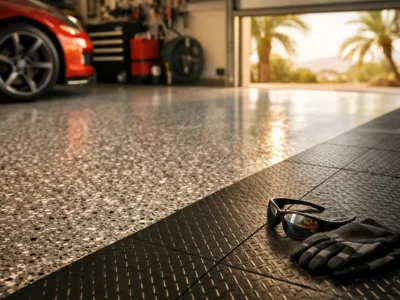
Step into a garage in July in places like Dallas, Las Vegas, or Orlando, and the floor tells the story fast. Heat, humidity, tracked-in water, hot tires, and constant use can turn the wrong surface into a peeling, stained, hard-to-clean headache. That is why choosing the right garage flooring for hot climates is less about looks alone and more about long-term performance.
For many homeowners, the garage is not just a parking spot. It is where sports gear lands after practice, tools get stored, holiday bins stack up, and weekend projects happen. In a hot region, the floor has to support all of that while standing up to serious temperature swings. A surface that looks great on installation day but softens, lifts, or fades under heat is not a smart investment.
What hot weather does to garage floors
Concrete may seem indestructible, but in hot climates it takes a beating. High surface temperatures can stress coatings, especially if the slab was not properly prepared or if the material was never designed for those conditions. In humid markets, moisture vapor can also work against adhesion from below, while heat pushes from above.
Then there is daily wear. Hot tires can transfer heat directly to the floor. Oil, lawn chemicals, and household spills tend to bake in faster when temperatures stay high. Dust builds up quickly on bare concrete, and once that dust starts moving into the house, the garage stops feeling like a clean extension of the home.
This is where material selection matters. Not every garage floor system performs the same way under sun exposure, heat retention, and heavy family use.
Best garage flooring for hot climates
For most homeowners, professionally installed polyaspartic or polyurea-based coating systems are among the strongest options for garage flooring for hot climates. These systems are known for strong adhesion, chemical resistance, and better flexibility under temperature changes than many basic coating products. They also deliver the finished, clean appearance that many families want when they are upgrading the garage as a whole.
A quality coating system does more than change the color of the floor. It creates a sealed surface that resists stains, reduces dust, and makes cleanup easier. That matters if your garage stores coolers, sports equipment, yard supplies, or the everyday overflow that tends to collect in active households.
Interlocking garage floor tiles can also work well in some hot-climate settings, particularly when homeowners want a specific design look or a surface that can be replaced section by section. But tiles come with trade-offs. Depending on the product and the condition of the slab beneath, they can allow dirt or moisture to collect underneath. In garages that see frequent spills, humidity, or wind-blown dust, that can mean more maintenance than expected.
Basic epoxy is another option people often ask about, but this is where the details matter. Some epoxy systems can perform well, but lower-grade or improperly installed epoxy is more likely to discolor, chip, or struggle with hot tire pickup over time. In hotter regions, that risk becomes harder to ignore. A lower upfront cost can turn into a shorter service life.
Why professional installation matters more in extreme heat
In hot climates, the success of a garage floor depends heavily on preparation. If the concrete is not mechanically ground, cleaned, and tested for issues that affect adhesion, even a premium product can underperform. Surface prep is not the glamorous part of the project, but it is often the difference between a floor that lasts and one that fails early.
Temperature during installation matters too. Coatings cure differently depending on heat and humidity levels, and experienced installers adjust timing and process accordingly. That is especially relevant in markets like San Antonio or Las Vegas, where garages can heat up fast and environmental conditions shift throughout the day.
Professional installation also helps homeowners avoid another common problem – choosing a floor based only on color chips and not on how the garage is actually used. A family storing bikes, sports gear, lawn equipment, and bulk household items needs a floor system designed for traffic, impact, and easy maintenance, not just showroom appeal.
The features that matter most
When evaluating garage flooring for hot climates, heat resistance is only one part of the picture. The best floor should also resist staining, abrasions, and household chemicals while staying easy to clean. Slip resistance matters as well, especially in areas where rain, pool traffic, or humidity can make the floor slick.
Appearance still matters, of course. Homeowners investing in garage upgrades usually want the space to feel intentional and finished. Decorative flake coating systems are popular for that reason. They add texture, help conceal minor dust or debris between cleanings, and create a polished look that pairs well with cabinetry, workbenches, and wall-mounted organization systems.
Color choice also deserves more thought than many people give it. Darker floors can absorb and show heat differently, while lighter or medium-toned blends often help the space feel brighter and more open. In garages with strong sunlight exposure, the right color blend can make the room more comfortable visually and more forgiving in day-to-day use.
Coatings vs. tiles in a hot-climate garage
If you are comparing coatings and tiles, the right answer depends on what you value most. A professionally installed coating usually creates the most seamless finish. It bonds directly to the concrete, minimizes places for dust and debris to collect, and gives the garage a clean, integrated appearance.
Tiles can be appealing if you want a modular look or a faster surface update, but they are not always the best fit for every family. In hot climates, expansion, trapped dirt, and ongoing cleanup underneath can become concerns depending on the tile style and the garage environment. For homeowners who want a one-time-investment approach with minimal fuss, a high-performance coating system often makes more sense.
That said, no flooring option is completely maintenance-free. Coatings are easier to maintain than bare concrete, but they still benefit from regular sweeping and occasional mopping. The advantage is that cleanup is straightforward, and stains are less likely to become permanent.
How garage flooring supports the whole space
The floor sets the tone for the entire garage. Even the best storage layout can feel unfinished if it sits on cracked, dusty concrete. On the other hand, when the floor is durable, attractive, and easy to keep clean, the entire garage works better.
This is especially true for families trying to reclaim square footage. A finished floor helps turn the garage into a space where cabinets, overhead storage, and wall organization systems feel cohesive rather than pieced together. It becomes easier to park, unload groceries, sort gear, or tackle weekend tasks without feeling like you are stepping into a neglected utility area.
That is one reason premium garage companies often treat flooring as part of a complete transformation rather than a standalone add-on. The floor is not just a surface under your feet. It affects cleanliness, visual order, and how comfortable the space feels to use every day.
How to choose the right system for your home
Start with how your garage functions now and how you want it to function next. If the space handles daily vehicle traffic, active family storage, and frequent foot traffic, durability should lead the decision. If appearance matters just as much, look for a floor system that combines performance with a refined finish.
You should also consider your local climate pattern, not just the word hot. Dry heat and high humidity create different stresses. A garage in the Dallas-Fort Worth area may face intense summer temperatures and heavy use from busy households, while a Florida garage may deal with more moisture alongside heat. The right recommendation should reflect those conditions, along with the age and condition of your concrete slab.
Most important, do not choose based on product type alone. Ask how the slab will be prepared, what topcoat is used, how the system handles hot tire exposure, and what kind of long-term appearance you can realistically expect. Good flooring decisions come from the full system, not just the label.
A great garage floor in a hot climate should make life easier, not add one more thing to manage. When the surface is built for the environment and installed with care, the garage becomes cleaner, more functional, and more finished from the moment you pull in. That is the kind of upgrade homeowners feel every single day.
 Overhead Storage vs Cabinets: What Fits Best?