

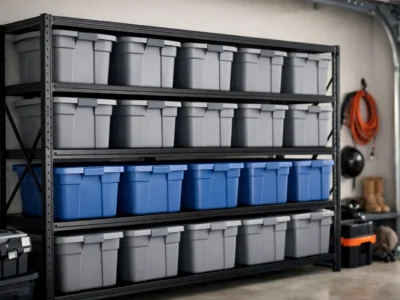
A stack of plastic totes can make a garage look organized while creating a daily access problem. When holiday bins, camping gear, keepsakes, and kids’ sports equipment are piled on the floor, finding one item often means moving five others. The best garage shelving for totes gives every bin a dependable home, protects it from floor-level moisture and pests, and keeps the items your family needs within reach.
For most homeowners, the right answer is not simply the shelf with the highest advertised weight rating. Tote storage works best when shelving is sized around the bins you already own, positioned for safe access, and integrated with the rest of the garage. That is how a storage system supports real life instead of becoming another place where clutter accumulates.
What Makes the Best Garage Shelving for Totes?
Totes are bulky, often heavy, and rarely identical. A shelf that works well for a few lightweight holiday bins may not be suitable for dense containers filled with books, tools, automotive supplies, or bulk household goods. The most effective shelving solution accounts for tote dimensions, loaded weight, available wall space, and how often each category needs to be accessed.
Strength comes first. Look beyond a single total capacity number and consider the load rating of each shelf. Weight should be distributed across the shelf rather than concentrated in the center or along one edge. Heavy-duty steel shelving and professionally engineered wall-mounted systems are typically better suited to a garage environment than light residential shelving intended for closets or utility rooms.
Shelf depth matters just as much. Many common storage totes are roughly 18 to 27 inches deep, but lids, handles, and tapered sides can add unexpected width. A shelf should fully support the tote base without forcing bins to hang over the front edge. For larger 27-gallon containers, deeper shelving is often necessary. Shallow shelves can still be highly useful for smaller labeled bins, cleaning supplies, and frequently used gear.
The best configuration also leaves adequate clearance above each tote. A bin may fit into an opening on paper but still be frustrating to remove if its lid catches the shelf above it. Allowing a few inches of lifting room makes the system easier for every member of the household to use, especially when retrieving a heavier container from a lower shelf.
Match Shelf Placement to How Your Family Uses the Garage
A garage should not require climbing, crouching, or moving a vehicle just to locate seasonal decorations. Thoughtful placement turns tote shelving into a practical part of the room.
Keep frequently used totes between knee and shoulder height whenever possible. These may include sports equipment, pool accessories, pet supplies, school project materials, or weekend hobby gear. Higher shelves are a better home for once-a-year items such as holiday decor, tax records, and seasonal clothing. Lower positions are appropriate for heavier bins, provided they remain clear of parking areas and easy to lift safely.
Wall-mounted shelving provides a clean, finished appearance and keeps storage off the floor. That open space below is valuable for larger equipment, floor cleaning, and a less crowded visual profile. It also makes it easier to spot spills or debris before they become a problem. In garages where floor space is especially limited, overhead storage can hold lightweight, rarely accessed totes while keeping the main storage zone available for everyday items.
There is a trade-off. Overhead storage maximizes square footage, but it is not the right place for items your family reaches for every week. Likewise, placing every tote at eye level may be convenient, but it can consume the wall space needed for cabinets, a workbench, bicycles, or other garage essentials. A complete design balances accessibility with capacity.
Choose Materials Built for a Garage Environment
Garages face temperature swings, humidity, dust, and the occasional bumped corner from a vehicle or lawn equipment. Shelving needs to be selected for that environment, not just for its appearance in a showroom.
Heavy-duty steel components offer excellent strength for tote storage and can maintain a clean, tailored look when designed as part of a larger organization system. Quality finishes help resist wear and corrosion, which is especially valuable in humid climates and in garages exposed to seasonal weather changes. Properly secured wall-mounted systems also avoid the instability that can occur when overloaded shelves shift or rack under uneven weight.
Shelf surfaces deserve attention, too. Wire shelves can provide airflow and make dust easier to see, but tote bases should be well supported. Solid shelf decks create a more continuous surface for containers of different shapes and sizes. The better choice depends on the tote collection, the intended load, and the overall system design.
Plastic totes themselves are not all equal. Thin containers may bow when heavily loaded, while higher-quality bins with reinforced lids and secure latches stack more reliably. Standardizing tote sizes where practical makes shelving more efficient, but there is no need to replace every bin at once. A well-planned system can accommodate a mix of existing containers while creating a clearer path toward consistency over time.
Plan for Capacity Without Filling Every Shelf
One of the most common garage storage mistakes is designing only for what is currently on the floor. Families accumulate more sports gear, seasonal decorations, hobby materials, and household supplies over time. Shelving that begins at full capacity leaves no room for those normal changes.
Plan for some open shelf space, particularly in the areas dedicated to seasonal rotation. When fall decorations come down and winter items come out, an organized garage should make that exchange easy. Empty space is not wasted space. It is what allows the system to keep working after a busy weekend, a growing family, or a new hobby adds more gear.
It also helps to separate tote storage by category rather than by wherever a bin happens to fit. Keep camping supplies together, group holiday bins by season, and reserve a shelf zone for household overflow. Clear labels on the front and side of each tote make categories visible whether bins are stored facing forward or turned sideways. For opaque containers, a simple inventory list kept in a nearby cabinet can prevent needless searching.
Safety Is Part of the Storage Decision
A garage shelving system should feel secure when fully loaded. That means the structure must be suited to the wall construction, installed with appropriate fasteners, and rated for the anticipated load. It also means avoiding tall, unstable stacks and ensuring shelves do not obstruct walkways, electrical access, or safe vehicle clearance.
Weight belongs lower whenever possible. A tote of family photo albums, books, or power tools can be surprisingly heavy, and lifting it down from overhead storage is not ideal. Keep these containers at a manageable height and reserve upper areas for lighter seasonal decor or soft goods. If children use the garage regularly, hazardous materials and sharp tools should be stored separately and out of reach rather than mixed into general tote storage.
Professional design and installation add value here because the system is planned as a whole. Shelf height, wall placement, capacity, access paths, cabinetry, and overhead storage all work together instead of competing for the same space. The result is safer, easier to maintain, and far more polished than a collection of mismatched storage pieces.
Build a Finished Garage Around Your Totes
Totes are useful, but they should not define the entire garage. The most successful garages use shelving for contained seasonal and household storage, then add purpose-built zones for tools, cleaning supplies, sports equipment, and hobby materials. Cabinets can conceal visual clutter, slatwall can keep loose gear visible and accessible, and a workbench creates a reliable place for projects without covering a shelf with unfinished tasks.
Garaginization designs storage systems around how a household actually lives. During a consultation, the goal is to identify what needs to be stored, what needs quick access, and what can move higher or out of sight. That approach helps homeowners protect their investment in quality totes while gaining a garage that looks orderly every day.
The right shelving should make a simple promise: when it is time to find the camping lanterns, the soccer tournament supplies, or the holiday lights, the answer is clear before you open the first bin. A professionally planned tote storage zone makes that everyday convenience part of your home, not another project waiting for a free weekend.
 Garage Organization San Antonio That Works