

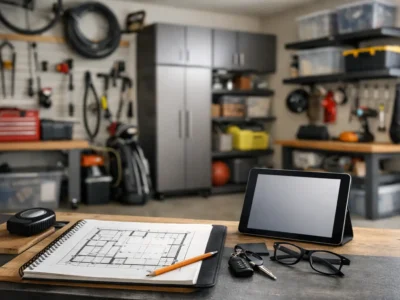
The problem is rarely that a garage is too small. More often, every type of belonging has claimed the same few feet of floor: bicycles leaning against bins, tools mixed with holiday décor, and sports equipment migrating wherever there is room. A thoughtful garage storage planning guide changes that pattern by assigning each item a logical home before storage systems are selected.
For busy families, the goal is not simply to make the garage look cleaner for a weekend. It is to create a finished, dependable space where everyday gear is easy to reach, heavy items are stored safely, and seasonal belongings stay out of the way until they are needed. Good planning turns the garage from household overflow into usable square footage.
Start Your Garage Storage Planning Guide With Real Inventory
Before choosing cabinets, shelving, overhead racks, or wall systems, take an honest inventory of what the garage needs to hold. This is where many homeowners make the wrong first decision: they buy storage based on what looks useful rather than what their household actually owns.
Group belongings by how often they are used. Daily and weekly items might include sports gear, backpacks, pet supplies, lawn equipment, or frequently used tools. Monthly items can include cleaning supplies, hobby materials, and project equipment. Seasonal items, such as holiday bins, camping equipment, coolers, or winter accessories, can live higher or farther from the main walking path.
Also consider the items that require special treatment. Heavy tool cases, large storage totes, bicycles, chemicals, and bulky equipment should not be treated like ordinary household clutter. Their size, weight, and access needs should shape the storage plan from the beginning.
As you sort, be realistic about what stays. A premium organization system works best when it is not asked to compensate for broken equipment, duplicate supplies, or items no one uses. Keeping only what supports your family’s routines gives every remaining item more room and a more useful place to live.
Plan Zones Before You Plan Products
The strongest garage layouts are organized around activity, not around random walls. A family may need an arrival zone near the interior entry, a sports zone for quick grab-and-go access, a gardening or tool zone, and a long-term storage zone for items used only a few times each year.
Think through how each zone functions on a real weekday. If children head to practice several times a week, their equipment should be easy to access without moving bins or stepping around other belongings. If weekend projects are part of the household routine, a workbench and nearby organized storage can keep tools visible, protected, and ready for use.
Your vehicle space should guide the layout as well. Start by identifying the parking footprint and the clearance needed to walk comfortably around vehicles. Then build storage around that area rather than filling the room first and hoping everything fits. This approach preserves the space homeowners most often want back: room to park, move, and use the garage without an obstacle course.
Put Frequent-Use Items Within Reach
The most practical storage belongs between knee height and shoulder height. This is the prime access zone for equipment used each week, including balls, helmets, cleaning products, hand tools, and hobby supplies. Slatwall systems, cabinets, and carefully planned shelving are particularly useful here because they keep items visible and off the floor.
A clear wall-mounted system can also make it easier for every member of the family to put things away. That matters. An organization plan that only works when one person manages it will not stay organized for long.
Reserve Higher Areas for Seasonal Storage
Overhead storage is valuable because it captures space that otherwise goes unused. It is best for clearly labeled, durable bins containing holiday decorations, seasonal clothing, keepsakes, camping supplies, and other items that do not need weekly access.
The trade-off is accessibility. Overhead racks should not become a catch-all for things your family reaches for often. They should be selected and installed with proper capacity, safe clearance, and a clear plan for what will be stored there. High-capacity storage is only an advantage when it remains secure and manageable.
Measure the Space and Its Constraints
A successful garage plan is based on more than wall length. Measure the width and depth of the garage, the available wall space, ceiling height, and the location of outlets, utility equipment, windows, and any areas that need to remain accessible. Note where vehicles park and how people enter, exit, and carry items through the space.
This information prevents expensive compromises later. For example, a deep cabinet may hold a great deal, but it can create a tight walkway if it is placed in the wrong location. A large overhead rack can be highly effective, but its size and placement must respect vehicle clearance and the items stored below it.
Professional design support is especially valuable in garages with uneven dimensions, multiple vehicles, utility constraints, or a mix of heavy equipment and household storage. An in-home consultation allows the system to be designed around the room as it exists, not around a generic layout.
Choose Storage by Function and Load
Storage systems should work together, with each one doing the job it is best suited to handle. Cabinetry creates a polished, concealed home for supplies, tools, and items you do not want on display. Heavy-duty shelving is useful for larger bins and bulkier belongings that benefit from open, visible access. Overhead racks protect seasonal items while freeing valuable floor space.
Wall-based organization is ideal for gear that needs to be grabbed quickly or adjusted as routines change. A slatwall system can organize sports equipment, yard tools, accessories, and other awkwardly shaped items without leaving them piled in a corner. A well-designed workbench gives projects a defined place instead of allowing them to spread across every available surface.
Material quality matters as much as configuration. Garage conditions can include heat, humidity, dust, frequent use, and substantial weight. Systems should be built for those demands, with durable finishes, reliable hardware, and installation that accounts for load capacity and safe attachment. A one-time investment should continue to perform after years of family use.
Protect the Floor and the Visual Finish
Storage planning is not only about where belongings go. It also affects how the entire garage feels. When the floor is clear and storage is aligned along walls or overhead, the room immediately appears larger, calmer, and easier to maintain.
Durable garage flooring completes that result. A finished floor improves the appearance of the space while providing a more resilient surface for everyday use. It also makes routine cleanup easier, which helps the garage stay polished instead of slowly returning to a cluttered utility area.
Color and finish choices should support the rest of the home rather than making the garage feel like an afterthought. Clean cabinetry lines, coordinated wall systems, and professional flooring create a finished aesthetic without sacrificing the strength needed for tools, bins, sports equipment, and family activity.
Build Flexibility Into the Plan
Families change, and garages need to keep up. Children’s sports needs evolve, hobbies expand, and storage demands shift when households move through different seasons of life. The answer is not to leave the garage loosely organized. It is to create a defined framework that can adapt.
Adjustable wall accessories, modular storage zones, and cabinets sized for a range of uses can provide that flexibility. The key is to protect the core layout: parking remains open, daily-use items remain accessible, and long-term storage remains contained. Changes should happen within the system, not across the floor.
For homeowners in Dallas-Fort Worth, where garages often carry the load for sports gear, tools, seasonal décor, and household overflow, a tailored plan can eliminate the need to rent space elsewhere or search through stacked bins every weekend. Garaginization designs and installs premium systems around how each family actually uses its home, with trained employee installers focused on a finished, long-lasting result.
The best time to plan garage storage is before the next season, project, or round of household accumulation forces another temporary fix. Give the space a purpose, give every category a zone, and let your garage support daily life with the order and capacity your family deserves.
 Garage Storage Company Atlanta Families Can Trust