

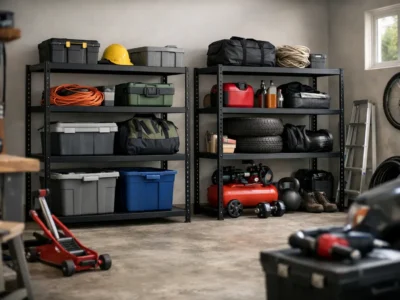
A garage shelf can look strong in a photo and still fail the moment it has to hold paint cans, power tools, bins of holiday decor, and a few years’ worth of sports equipment. That is why choosing the best heavy duty shelving units is less about finding the biggest rack online and more about matching storage to real household use.
For most homeowners, the right shelving needs to do three things well. It has to carry serious weight without sagging, fit the space without making the garage feel cramped, and keep everyday items easy to reach. If one of those is missing, the garage may technically be organized, but it will not feel easier to use.
What makes the best heavy duty shelving units worth buying
Weight capacity is the first filter, but it should not be the only one. Many shelves advertise a high total load rating, yet that number can be misleading if the weight is unevenly distributed or if the shelf only performs as rated when anchored properly. A unit rated for 2,000 pounds across multiple tiers may still disappoint if one shelf bows under a stack of tool cases.
Material matters just as much. Steel shelving is usually the best choice for garages because it handles temperature swings, resists warping, and supports heavier loads than particleboard or light plastic systems. That said, not all steel units are equal. Thicker gauge steel, reinforced beams, and better shelf decking make a noticeable difference over time.
Stability is another factor homeowners often underestimate. A shelf that wobbles every time you pull down a storage bin does not inspire confidence, especially in a family garage where kids may be grabbing sports gear or scooters. The best systems feel planted and secure, whether they are freestanding, wall-mounted, or integrated into a larger storage layout.
Best heavy duty shelving units by type
Freestanding steel shelving
Freestanding steel units are the most familiar option, and for many garages they are a practical starting point. They work well for boxed items, tool storage, automotive supplies, and overflow household goods. Their biggest advantage is flexibility. You can position them along a side wall, use them in a deeper single-car bay, or dedicate a row to seasonal storage.
The trade-off is footprint. Deep shelves can solve one problem while creating another if they consume valuable parking or walking space. In a garage that already feels tight, a large freestanding rack can quickly become an obstacle instead of a solution.
Wall-mounted shelving
Wall-mounted heavy duty shelving is often a better fit when floor space matters. By lifting storage off the ground, these systems create cleaner sightlines and make sweeping, hose-down cleaning, and everyday access easier. They are especially useful for storing bins, detailing supplies, gardening items, and household overflow that does not need to sit at floor level.
The main consideration is installation. Wall-mounted systems need to be attached correctly to structural framing, not just drywall, and load limits depend heavily on how they are mounted. Done right, they create a cleaner, more finished garage. Done poorly, they can become a safety concern.
Overhead storage racks
Overhead racks deserve a place in the conversation because some of the best heavy duty shelving units are not at eye level at all. For long-term or less frequently used items like holiday decorations, camping gear, or archival boxes, ceiling-mounted storage can free up a surprising amount of usable garage space.
Still, overhead storage is not for everything. Heavy items that need regular access should not live above your vehicle or your head. The sweet spot is bulky but manageable items that you only need a few times each year.
Custom garage shelving systems
Custom shelving systems are often the best answer when a homeowner wants more than basic storage. Instead of forcing standard-size racks into an awkward garage, a custom layout is designed around the room, the family’s routines, and the types of items being stored. That usually means a better mix of shelf depths, heights, clearances, and access points.
This approach also looks better. A garage can be highly functional without resembling a stockroom. When shelving is coordinated with cabinets, slatwall, and overhead storage, the entire space feels intentional and easier to maintain.
How to choose the right shelving for your garage
Start with what the shelves actually need to hold. A shelf for gallon paint cans, toolboxes, and power equipment should be chosen very differently from a shelf for paper towels and pool toys. Heavy duty means different things depending on the load. Dense items create much more stress than large lightweight bins.
Next, think about access. Homeowners often over-prioritize maximum capacity and under-prioritize daily convenience. If the shelves are so deep or so high that common items are difficult to grab, clutter tends to creep back in. The best setup makes high-use items simple to see and reach, while pushing backup supplies and seasonal items farther out of the way.
Measure more than the wall. Check vehicle door swing, garage door tracks, water heaters, electrical panels, and the path people take in and out of the house. In many garages, the limiting factor is not width. It is clearance and movement.
Features that matter more than marketing claims
Adjustable shelves are genuinely useful because garage storage needs change. A family with young kids may prioritize sports bins and scooters now, then shift to tools, hobby supplies, and larger equipment later. Shelving that can adapt saves money and avoids a second round of replacement.
Powder-coated finishes are also worth attention. Garages are rough environments. Shelves face humidity, dust, temperature changes, and occasional bumps from bikes, bins, and lawn equipment. A durable finish helps the system keep its appearance and resist wear.
Anchoring options should never be treated as an afterthought. Even a strong freestanding unit benefits from proper anchoring in many garages, especially when the shelves are tall or loaded unevenly. Safety matters more than convenience here.
Wood composite shelving surfaces can be acceptable in some units, but they are not always the best long-term choice for a working garage. Moisture exposure, spills, and repeated heavy loading can shorten their lifespan. For homeowners looking for a one-time investment, stronger shelf surfaces and premium framing are often worth it.
When store-bought shelving is enough – and when it is not
If your garage needs are simple, a well-built steel shelving unit may be enough. A smaller household with limited storage demand can do very well with two or three properly placed units and a clear plan for what belongs where.
But many family garages outgrow basic racks quickly. That is especially true when the space has to support tools, bikes, coolers, yard supplies, sports gear, bulk household items, and seasonal storage all at once. At that point, the issue is not just shelf strength. It is system design.
A professionally planned garage usually performs better because each zone has a purpose. Shelving handles bins and heavy goods, cabinets hide visual clutter, slatwall keeps grab-and-go items accessible, and overhead storage captures the items that do not need to stay at ground level. The result is not just more storage. It is a garage that works better every day.
For homeowners in areas like Farmers Branch, where garages often serve as active storage hubs for busy households, that distinction matters. The right shelving should support the way your family actually lives, not force everything into a one-size-fits-all rack.
Common mistakes to avoid with heavy duty shelving
One mistake is buying based on total weight rating alone. Another is ignoring the shape and size of the items being stored. A shelf may hold enough pounds on paper while still failing to organize awkward bins, oversized tool cases, or long equipment cleanly.
Another common issue is stacking too much on open shelves without any visual discipline. Open storage is useful, but if every shelf is packed edge to edge with mismatched containers, the garage starts to feel cluttered again. Heavy duty shelving works best when it is paired with consistent bins, labeled zones, and a layout that makes sense at a glance.
Installation shortcuts also create problems. Improper spacing, poor anchoring, and overloaded upper shelves can all reduce safety. In a premium garage, the goal is not just to store more. It is to store more with confidence.
The best heavy duty shelving units do not just carry weight. They support a cleaner garage, easier routines, and a space that feels finished instead of constantly in recovery mode. If your shelves can do that, they are doing more than holding boxes. They are giving the garage a job it can finally do well.
 Heavy Duty Racking Systems for Garages