
A garage floor sees more than most floors in the house. It carries hot tires, lawn equipment, dropped tools, muddy cleats, paint spills, bikes, and the constant movement of an active family. When comparing epoxy vs polyaspartic garage flooring, the right choice is not simply about color or price. It comes down to how you use the space, the condition of the concrete, your timeline, and the level of long-term performance you expect.
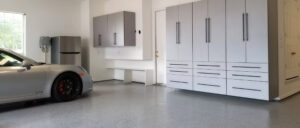
Both systems can give a garage a clean, finished appearance that complements organized cabinetry, wall storage, and work areas. But they are different materials with different installation requirements. A professional assessment helps ensure the coating is selected and installed for the actual conditions in your garage, not just the look you want on day one.
Epoxy vs Polyaspartic Garage Flooring at a Glance
Epoxy is a resin-based coating that has been used for decades in residential, commercial, and industrial settings. It is known for building a thick, hard surface with strong adhesion when the concrete is properly prepared. Epoxy can be an excellent flooring solution, especially for homeowners who have a flexible installation schedule and want a durable decorative finish.
Polyaspartic is a newer coating technology in the polyurea family. It cures much faster than epoxy and is generally more resistant to UV exposure, staining, and temperature changes. It is often selected for professionally installed garage floors because it can deliver a high-performance finish with less downtime.
Neither coating is automatically right for every home. The best system depends on the slab, climate, preparation process, traffic level, and the quality of the installation.
The Biggest Difference: Cure Time
For busy households, cure time is often the deciding factor. Traditional epoxy systems may require several days between preparation, coating applications, and full return to service. Depending on temperature and humidity, a garage may need to remain clear for multiple days before vehicles can be parked inside.
Polyaspartic coatings cure much more quickly. Many professionally installed systems can be completed in a day, with a much faster return to use than epoxy. That can be particularly valuable when the garage is your main entry point, your home gym space, or the place where your family stores bikes, strollers, sports gear, and essential tools.
Fast curing does not mean rushed work. Concrete still needs thorough preparation. Professional installers assess the slab, mechanically prepare the surface, repair appropriate imperfections, and apply each layer at the correct rate. The difference is that polyaspartic chemistry allows the finished floor to set up far more quickly once installation begins.
Durability Under Daily Garage Use
A quality epoxy floor can be tough, thick, and highly resistant to ordinary wear. It performs well against many chemicals and can create a substantial protective layer over concrete. For garages with moderate use, epoxy may offer a strong value when installed under favorable conditions.
Polyaspartic systems are typically more flexible than epoxy. That flexibility matters because concrete expands, contracts, and experiences minor movement as temperatures change. A coating with more give is better positioned to handle seasonal changes without becoming brittle.
This is especially relevant in areas with intense heat, cold snaps, or rapid temperature swings. Homeowners in North Texas, Atlanta, Las Vegas, Orlando, and San Antonio all experience conditions that can put pressure on a garage floor over time, although the exact challenge varies by market. A professional flooring recommendation should consider the climate as well as the condition of your concrete.
For a family garage, durability also means the floor should continue to look good around the edges of daily life. Polyaspartic coatings tend to stand up well to abrasions from rolling equipment, storage bins, bicycles, and routine foot traffic. The right decorative chip broadcast can also help disguise dust and minor debris between cleanings.
UV Stability and Color Retention
Sunlight is one of the clearest distinctions between the two materials. Epoxy can amber or yellow after extended exposure to ultraviolet light. This may be less noticeable in a fully enclosed garage, but it can become apparent near openings, windows, or areas that receive regular sun.
Polyaspartic coatings are generally more UV stable. They are designed to retain their color and clarity better when exposed to sunlight. For homeowners who want a consistent, polished appearance throughout the garage, this is a meaningful advantage.
A floor coating should support the finished look of the entire space. When paired with coordinated storage systems and clear zones for tools, hobbies, and family gear, a color-stable floor helps the garage feel like a purposeful extension of the home rather than a catch-all storage area.
Stain and Chemical Resistance
Both epoxy and polyaspartic coatings can make a garage easier to clean than bare concrete. Instead of allowing oil, dirt, and household spills to absorb into porous concrete, a coated floor creates a protective surface that can be wiped or cleaned more easily.
Polyaspartic coatings often provide stronger resistance to common staining agents, including automotive fluids, cleaners, and many household chemicals. Epoxy also resists chemicals well, but its performance can vary significantly by product quality, thickness, and installation method.
There is still no reason to let a spill sit indefinitely. Prompt cleanup is the best practice for any garage floor. The benefit of a premium coating is that it gives you more protection, less concrete staining, and a surface that is simpler to maintain when life gets messy.
Appearance and Slip Resistance
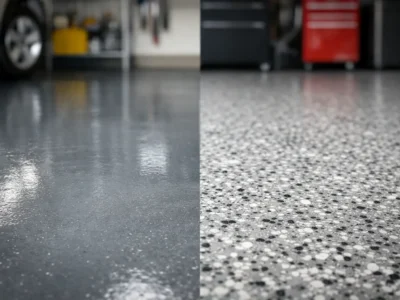
Epoxy and polyaspartic floors are available in a wide range of colors and decorative flake blends. A full-chip system creates a textured, layered finish that hides minor dust and provides visual depth. It is a practical choice for families who want a clean appearance without needing to sweep constantly.
Gloss level is another consideration. A high-gloss floor can look sharp and reflect light well, making the garage feel brighter. However, a floor should not be chosen for shine alone. Texture and topcoat selection affect traction, particularly when shoes are wet or when a vehicle brings rainwater into the garage.
A professionally specified system balances appearance with day-to-day safety. This matters in a garage used by children carrying sports equipment, adults moving storage totes, or anyone walking in with wet shoes after a storm.
Cost: Look Beyond the Initial Quote
Epoxy is often less expensive upfront than a polyaspartic system. That can make it attractive when budget is the main concern. But the lowest initial cost is not always the lowest ownership cost if the floor needs repairs, recoating, or replacement sooner than expected.
Polyaspartic flooring commonly costs more because of the material, the installation expertise required, and the speed at which crews must work. In return, homeowners may receive better UV stability, faster curing, and excellent resistance to everyday garage wear.
The real comparison should include concrete preparation, crack treatment, coating thickness, decorative finish, topcoat quality, warranty coverage, and installer experience. A quote that leaves out preparation can look appealing at first while failing to address the foundation of a long-lasting floor.
Why Concrete Preparation Matters More Than the Label
The best coating cannot compensate for poor surface preparation. Concrete may have moisture issues, previous coatings, surface contamination, cracks, or weak top layers that need attention before a new floor system is applied.
Professional installation typically begins with mechanical surface preparation rather than a simple acid wash. This creates the proper profile for adhesion and exposes issues that may affect the result. Moisture testing and slab evaluation are also important because moisture vapor can interfere with a coating bond.
This is where homeowners benefit from working with garage specialists rather than treating flooring as a cosmetic afterthought. The floor has to perform beneath everything else in the garage, including cabinets, storage systems, workbenches, and the daily activity that makes the space useful.
Which Garage Floor Is Right for You?
Choose epoxy when you have a more flexible schedule, limited direct sun exposure, and a quality system from an installer who will properly prepare the concrete. It can be a durable, attractive choice for the right garage.
Choose polyaspartic when quick return to service, UV resistance, flexibility, and long-term appearance are high priorities. It is often the stronger fit for homeowners investing in a finished, highly functional garage designed to support busy family life.
At Garaginization, flooring is considered part of a complete garage transformation, not an isolated upgrade. A professionally installed floor creates a durable foundation for the organized, finished space you want to use every day. The best next step is a consultation that evaluates your concrete, your household routines, and the storage goals that will make your garage work harder for your family.
 Best Garage Flooring Options for Busy Homes