
A garage floor takes more abuse than almost any surface in the home. It carries vehicles, lawn equipment, rolling tool chests, muddy cleats, bike tires, holiday bins, and the occasional paint or oil spill. The best garage flooring options do more than improve appearance – they make the space easier to clean, safer underfoot, and ready to support the way your family actually uses it.
For homeowners who are investing in cabinetry, wall organization, overhead storage, or a dedicated work area, flooring is what brings the entire garage together. The right system creates a finished foundation beneath every cabinet, shelf, and parking space. The wrong choice can peel, stain, become slick when wet, or demand more maintenance than expected.
What a Garage Floor Needs to Handle
Before comparing materials, consider the conditions inside your garage. A family garage may need to handle daily vehicle traffic, hot tires, wet shoes, dropped tools, sports equipment, and seasonal storage. In areas with intense heat, such as North Texas or Las Vegas, temperature swings and ultraviolet exposure can also affect how certain coatings perform.
Durability matters, but it is not the only factor. A floor should also be easy to maintain, resistant to common household chemicals, and comfortable to walk on while loading groceries or working on a weekend project. Appearance counts, too. A clean, finished floor can make an organized garage feel like a true extension of the home rather than a catch-all storage area.
The best choice depends on the condition of your concrete, how quickly you need the garage back in service, the level of vehicle traffic, and whether you want a permanent, professionally finished surface or a more flexible solution.
Best Garage Flooring Options Compared
Polyaspartic Floor Coatings
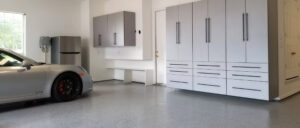
For many homeowners, a professionally installed polyaspartic coating is the strongest all-around choice. This high-performance system bonds to properly prepared concrete and creates a durable, attractive surface that resists stains, abrasion, hot-tire pickup, and everyday wear. Decorative color flakes can be added for texture and a polished, custom look.
Polyaspartic coatings cure quickly, which is a major advantage for busy households. Depending on conditions and the installation system, the garage can often return to use much sooner than it would with a traditional coating. They also offer excellent color stability, helping the floor maintain its finish in garages that receive significant natural light.
Professional preparation is essential. Concrete must be mechanically prepared and repaired where needed so the coating can bond correctly. A premium coating is a one-time-investment solution when the surface preparation, materials, and installation standards are equally premium.
Epoxy Coatings
Epoxy is a familiar garage flooring option because it can provide a hard, glossy, chemical-resistant finish. When professionally applied over correctly prepared concrete, epoxy can transform a worn, dusty slab into a cleaner and more finished surface.
Its trade-off is cure time and sensitivity to installation conditions. Epoxy generally takes longer to cure than polyaspartic systems, and some formulations can yellow or fade with extended UV exposure. It can still be a good fit for certain garages, particularly when cost is the primary concern and the space does not need to return to service immediately.
Not all epoxy systems are equal. Thin coatings and poorly prepared concrete are often behind the peeling floors homeowners see after only a few years. The coating itself matters, but the process beneath it matters just as much.
Interlocking Garage Floor Tiles
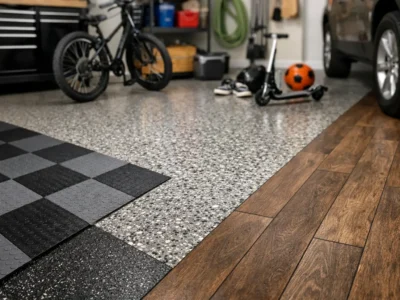
Interlocking tiles create an immediately finished look and are available in rigid plastic, flexible PVC, and patterned designs. They can be especially appealing for homeowners who want visual definition between parking areas, a home gym zone, and a workbench area.
Tiles are comfortable underfoot, replaceable if a section is damaged, and useful for hiding minor cosmetic flaws in concrete. Some styles also allow moisture and debris to move beneath the surface, which can be helpful in wet climates or garages that regularly receive rainwater from vehicles.
However, tiles are not completely maintenance-free. Dirt, moisture, and small debris can collect below them, so periodic cleaning may be needed. Their seams also create a different feel than a continuous coating, and rolling heavy equipment across some tile styles can be less smooth. Quality and proper fit make a noticeable difference in performance.
Roll-Out Vinyl Flooring
Roll-out flooring is a practical option for creating a clean parking surface with less installation time. It is often used beneath vehicles to protect concrete from drips, road grime, and moisture. Available in several colors and patterns, it can make a garage look more intentional without permanently coating the concrete.
This solution works best for homeowners who want basic coverage and easy replacement. It is less ideal for an entire high-use garage with heavy cabinetry, frequent rolling loads, or extensive workshop activity. Edges can shift if the material is not properly secured, and moisture beneath the flooring may need attention.
Garage Floor Mats
Floor mats serve a narrower purpose than a full flooring system. They are useful under a vehicle, near a workbench, or beneath frequently used equipment where extra protection is needed. A mat can catch snowmelt, mud, drips, and debris before they reach the concrete.
For a family that wants to protect a newly coated floor or keep a specific parking area cleaner, mats are a smart supplement. They are not usually the best standalone answer for a complete garage transformation, since they leave most of the concrete exposed and do not create a uniform finished appearance.
Concrete Stains and Sealers
Concrete stains and clear sealers can improve the look of a garage floor while reducing dust and surface absorption. They are often less expensive than a high-build coating system and can be appropriate for garages with light use.
The limitation is protection. A sealer may not offer the same resistance to hot tires, impact, chemical spills, or abrasion as a premium polyaspartic or epoxy system. Stains can add character, but they do not repair damaged concrete or provide a thick protective layer. For homeowners seeking a highly durable, showroom-quality garage, they are typically not the first choice.
How to Choose the Right Surface for Your Garage
Start with your daily use, not just the color sample. If your garage is primarily a vehicle space with occasional household storage, a quality coating or roll-out floor may be sufficient. If it also serves as the family command center for tools, sports gear, hobbies, bikes, and seasonal items, a continuous professional coating provides a durable foundation for the whole environment.
Next, look closely at the concrete. Cracks, pitting, moisture concerns, old paint, and previous coatings should be evaluated before selecting a floor. Covering a problem slab without correcting the underlying issue can lead to disappointing results. A professional consultation can identify whether repairs, moisture testing, or mechanical surface preparation are needed before installation.
Finally, consider the complete design. Flooring should complement your cabinetry, slatwall, shelving, and work areas. A neutral flake blend can keep the garage bright and polished while helping conceal everyday dust. A textured finish can add traction, which is valuable around wet shoes, vehicles, and active family equipment.
Why Professional Installation Changes the Result
A garage floor is only as dependable as the surface beneath it. Professional installers evaluate concrete condition, prepare the slab with the correct equipment, repair appropriate imperfections, and apply each layer at the proper thickness. This is the difference between a floor that looks good for a season and one designed for years of daily use.
Professional guidance also helps homeowners avoid choosing a product based on price alone. A less expensive material may make sense for a light-use space, but it may not hold up beneath parked vehicles, heavy storage, and frequent family activity. The right recommendation balances performance, appearance, budget, and how long you expect the solution to last.
A well-chosen garage floor changes how the entire space feels. When the concrete is protected, the storage is organized, and every item has a place, pulling into the garage becomes one less source of household friction – and a better start to every day.
 Garage Wall Storage Systems That Clear the Floor