
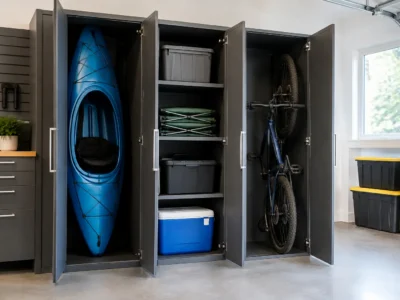
A large cooler leaning against the wall, bins stacked three high, a folded stroller, power tools, and camping gear can consume a garage faster than most homeowners expect. The issue is rarely a lack of square footage. It is that bulky belongings have no assigned, properly supported home. Garage cabinets for bulky items bring that overflow under control while protecting the things your family actually uses.
The right cabinet system does more than make a garage look finished. It creates clear zones for heavy, awkward, seasonal, and frequently used equipment, so family members can find what they need without pulling half the garage apart. For homeowners who want a garage that works as hard as the rest of the home, cabinetry is often the foundation of a lasting storage plan.
Why bulky items need a different storage strategy
Bulky belongings create challenges that small tools and household supplies do not. They are harder to lift, take up deep floor space, and can become safety hazards when they are stacked or wedged into corners. A large tote may be manageable at waist height but frustrating and unsafe when it is balanced overhead. A generator, shop vacuum, pressure washer, or loaded cooler needs a stable surface and enough clearance to remove it without rearranging everything around it.
This is why one-size-fits-all storage rarely produces a functional result. Shallow cabinets are excellent for cleaning supplies, hand tools, and sports accessories, but they may not accommodate a folding wagon or large camping bins. Deep cabinets solve one problem while creating another if the contents disappear behind one another. The best plan considers the size, weight, frequency of use, and shape of every major category before cabinet dimensions are finalized.
A professionally designed system also keeps bulky items from claiming valuable parking and walking space. When the floor is clear, the garage feels larger, cleaner, and easier to use every day.
What to store in garage cabinets for bulky items
Cabinets are especially valuable for items that need protection from dust, visual clutter, and accidental damage. They can also keep equipment out of reach of young children while making it readily available to adults.
Common candidates include large coolers, sports bags, camping bins, folding chairs, automotive supplies, power equipment, tool cases, hobby materials, pet supplies, and household overflow. Seasonal decor can also work well in cabinets when it is packed in consistently sized containers and stored according to how often it is needed.
Not every bulky item belongs behind a cabinet door. Long-handled yard equipment, bicycles, and oversized recreational gear may need a complementary wall-based or overhead solution. A complete garage organization plan uses each storage category for its strengths instead of forcing every possession into cabinetry.
Weight capacity matters more than appearances
A cabinet can look substantial and still be poorly suited to a heavy load. Thick cabinet construction, durable hardware, secure wall attachment, and properly engineered shelves all matter when storing dense tool cases, large containers, or equipment. The cabinet must carry the weight safely over years of use, not merely hold it for a photo.
Shelf adjustability is useful, but it should not come at the expense of strength. For very heavy items, a design may call for lower storage zones with reinforced support and fewer wide, unsupported spans. This approach keeps lifting safer and helps prevent sagging shelves over time.
Depth should match the item, not the wall
Deep storage is appealing because it seems to provide more capacity. Yet a cabinet that is too deep can bury items in the back, creating a dark, forgotten zone that eventually becomes cluttered again. The most efficient depth depends on what is being stored.
Large bins and coolers may justify deeper cabinet bays. Tool cases and sports equipment often work better in medium-depth configurations that allow clear visibility. A custom design can combine depths across one wall, creating a polished appearance without sacrificing easy access.
Design storage around how your family uses the garage
The most useful garage cabinets for bulky items are planned around real routines. Ask what comes in and out weekly, what only appears during certain seasons, and what needs to be accessible at a moment’s notice. A family that spends weekends at the ball fields has different priorities from a household with camping equipment, woodworking tools, or extensive holiday decor.
Frequently used items should be stored between knee and shoulder height whenever possible. This is the most comfortable range for loading and unloading. Heavy objects generally belong lower, where they can be lifted with more control. Infrequently used bins can occupy higher cabinet shelves or other designated storage areas, leaving prime space available for daily life.
Consider the path each item takes. A cooler should be easy to grab near the vehicle. Gardening and outdoor-care supplies should be grouped where they can be returned quickly after use. A cabinet wall near a workbench can hold tool cases and project materials without scattering them across the floor. These small decisions are what make an organized garage stay organized.
Closed cabinets create a cleaner, calmer garage
Open storage has a place, particularly for items that need quick visibility. But bulky belongings can make open shelving feel crowded even when everything is technically put away. Cabinet doors create visual calm by concealing mismatched bins, equipment cases, and household extras behind a coordinated finish.
That finished appearance matters to homeowners who use the garage as more than a place to park. It can be an entry point for the family, a project area, a staging space for weekend activities, and a practical extension of the home. Closed cabinetry keeps the environment orderly without requiring every stored item to look uniform.
There is a practical advantage as well. Doors help limit dust buildup on stored supplies and keep loose contents contained. For homes in hot, dry conditions or areas with frequent outdoor activity, that protection can make a noticeable difference in how often gear needs to be cleaned before use.
Pair cabinets with the right supporting systems
Cabinets work best as part of a coordinated plan, not as a stand-alone answer to every storage problem. Heavy-duty shelving can serve very large containers that need fast access. Overhead racks can reserve ceiling space for lightweight, less frequently used seasonal items. Slatwall can organize the items that are awkward to place inside a cabinet, while a workbench gives projects a defined surface instead of taking over the floor.
The key is giving every category a purpose-built location. This reduces the common pattern of buying more storage only to find that the garage still feels crowded. Capacity alone is not the goal. Accessibility, safety, and a logical flow are what turn storage into an everyday convenience.
A professional garage designer can identify where cabinetry should begin and end, how much clearance is needed around vehicles, and which items should be grouped together. This is particularly useful when a garage has limited wall space, multiple vehicles, or a mix of family activities competing for room.
Details that make cabinetry easier to live with
A cabinet system should feel effortless after installation. Durable pulls and hinges make a difference when doors are opened with full hands. Easy-to-clean finishes help the space maintain its polished look. Thoughtful placement of tall cabinets, base cabinets, and countertop space can transform a cluttered wall into a useful household command center.
It is also wise to plan for change. Families accumulate new sports gear, children outgrow equipment, and hobbies evolve. A well-designed system includes enough flexibility to adapt without requiring a complete overhaul. Adjustable interiors, intentionally open zones, and a realistic allowance for future storage needs can protect the value of the investment.
Garaginization approaches each garage as a working environment, not a generic storage room. With custom design guidance and trained installers, homeowners can create a high-capacity cabinet system that looks intentional, performs reliably, and supports the way their household actually lives.
The best storage plan is the one that makes leaving for a game, a camping trip, or a weekend project feel simple. When bulky gear has a strong, accessible place to go, the garage stops being the catch-all room and becomes usable space your family can enjoy.
 How to Actually Use Your Garage Ceiling (And Why Motorized Garage Overhead Rack Storage Changes the Equation)