

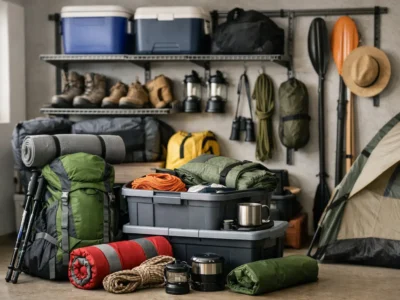
A camping trip should begin with a quick equipment check, not an hour spent moving bins, untangling chairs, and hunting for the tent. Knowing how to organize camping gear in your garage gives every item a dependable home, protects your investment, and makes it far easier to say yes to a last-minute weekend away.
Camping equipment is challenging because it is bulky, seasonal, and made up of many small pieces that only work when they stay together. A tent without its poles, a stove without fuel canisters, or a cooler hidden beneath holiday decorations creates frustration before the vehicle is even loaded. The right garage organization plan solves that problem by separating daily access from long-term storage.
How to Organize Camping Gear Garage Storage by Zone
The most effective system starts with zones, not containers. Before choosing where anything goes, gather all camping items in one area and sort them by how they are used. This reveals duplicates, damaged gear, and supplies that have drifted into the garage without a purpose.
Create a ready-to-go camping zone for the equipment your family uses on nearly every trip. Tents, sleeping bags, camp chairs, lanterns, cookware, coolers, and first-aid supplies belong here. Position this zone near the area where you load the car so the essentials can move out in a few efficient steps.
A second zone should hold occasional-use items: extra sleeping pads, larger tents, fishing equipment, specialty cooking gear, and backup chairs. These items still need protection and a clear label, but they do not need the most accessible location. Seasonal and long-term supplies, such as cold-weather camping gear or infrequently used water-sport accessories, can occupy the highest storage areas.
Finally, reserve a separate place for gear that needs attention after a trip. A small return-and-reset area prevents damp tents, muddy shoes, and half-empty supply bags from being put away before they are clean and complete. This one habit protects the rest of the garage from clutter creeping back in.
Start With What Must Stay Accessible
The best storage location depends on frequency of use, weight, and how easily an item can be damaged. Keep the pieces you reach for first at a comfortable height. A tall cabinet with adjustable interior space is ideal for compact gear, cookware, flashlights, trail games, and bins of smaller supplies. Closed cabinetry also creates a finished appearance while keeping dust and visual clutter out of sight.
Wall-mounted organization systems work well for awkward, grab-and-go items. Camp chairs, folding tables, backpacks, lanterns, and hiking poles can be arranged vertically rather than stacked in a corner. When equipment is visible and assigned to a dedicated hook or accessory holder, family members can return it without guessing where it belongs.
Do not make every camping item visible. Open storage can be convenient, but too much of it can make a garage look busy. Use wall space for sturdy equipment that benefits from quick access, and use cabinetry for loose supplies, small accessories, and anything you would rather not see every day.
Use Overhead Space for Bulky, Seasonal Gear
Overhead racks are one of the most valuable ways to reclaim floor space from camping equipment. They are especially useful for large but lightweight items that may sit unused for months, including inflatable mattresses, extra bedding, empty storage totes, and seasonal tents.
There is a trade-off: overhead storage is not the right home for items you need every month or for anything that is difficult to lift safely. Store only gear that is clean, dry, and packed securely. Use durable, clearly labeled containers with fitted lids so you can identify contents from below and keep dust and pests out.
Weight capacity matters. Camping bins can become surprisingly heavy when filled with cookware, tools, or supplies. Professionally designed overhead storage is built to hold significant loads when properly installed, but it should still be loaded thoughtfully. Place heavier containers where they are easiest to retrieve and avoid storing fragile equipment beneath an item that could be awkward to lower.
Keep Complete Kits Together
The fastest way to eliminate pre-trip searching is to pack related items as kits. Instead of placing tent stakes in one bin, repair tape in a cabinet, and lantern batteries in a drawer across the garage, keep each category together in a labeled container or designated cabinet section.
A family camping system may include a sleep kit, kitchen kit, lighting and power kit, first-aid kit, and activity kit. Label the outside of each container in large, readable text. If you camp in different conditions, use a simple color system to distinguish warm-weather equipment from cold-weather supplies or car-camping gear from hiking gear.
Be careful not to overpack every bin. A container that is too heavy or too full is unlikely to be returned to its proper place. Smaller containers are often more useful for dense items, while larger bins are better for soft, lightweight equipment. Clear containers can help with identification, although opaque bins with detailed labels often create a cleaner visual result.
Make Room for Drying, Cleaning, and Restocking
Camping gear lasts longer when it is never stored wet. Before putting tents, tarps, sleeping bags, and camp chairs away, make sure they are fully dry and free of dirt, sand, and food debris. Moisture trapped in a tightly packed bin can lead to mildew, odors, and damaged fabrics.
A dedicated work surface gives your family a practical place to inspect gear after each outing. Use it to replace batteries, wipe down cookware, refill the first-aid kit, and confirm that stakes, poles, and instructions are back with the tent. A durable workbench with integrated drawers or nearby cabinetry turns this reset process into a routine instead of another unfinished chore.
This area is also useful before a trip. You can stage the gear you plan to bring, check the weather-specific items, and pack with a clear view of what is missing. For active families, that preparation space can be as valuable as the storage itself.
Protect Gear From Garage Conditions
Garages experience heat, dust, and changing humidity, particularly in areas such as North Texas, Central Florida, and Nevada. Camping equipment can tolerate some variation, but electronics, batteries, fuel canisters, adhesives, and certain fabrics need additional care.
Keep batteries and small electronics in a dry, enclosed cabinet away from extreme temperature swings when possible. Follow manufacturer guidance for fuel storage, and never place fuel near ignition sources or in direct sun. Food, scented toiletries, and anything that may attract pests should not remain in camping bins between trips.
Raised storage is helpful for keeping equipment away from floor moisture and accidental spills. It also makes cleaning easier. A finished, durable garage floor complements an organized storage plan because it creates a clean foundation for loading vehicles, rinsing equipment, and returning from muddy adventures without sacrificing the appearance of the space.
Design for the Whole Family
A garage organization system only works if everyone can use it. Assign lower, easy-to-reach locations for items children can safely carry, such as their sleeping bags, camp chairs, water bottles, and activity bags. Keep sharp tools, fuel, and heavy equipment secured higher or behind cabinet doors.
Consider the sequence of a typical camping departure. Your family should be able to retrieve the tent, sleeping supplies, kitchen kit, cooler, and chairs without moving unrelated boxes. Bikes, sports equipment, and household items should have their own defined areas so camping gear does not become trapped behind them.
This is where a custom design makes a meaningful difference. A professionally planned garage can combine high-capacity overhead racks, enclosed cabinets, wall organization, and a work area in a layout built around your family’s actual equipment. Garaginization helps homeowners create storage systems that look polished, use available square footage intelligently, and support the way their households live.
A well-organized camping zone does more than clear a corner of the garage. It gives your family a reliable launch point for weekends outdoors, with gear protected, supplies accounted for, and the next trip always within easy reach.
 How to Store Bikes in Garage Without Losing Space