

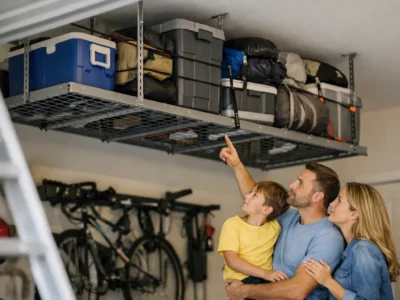
A garage can collect a surprising amount of life: holiday bins, camping supplies, sports equipment, keepsakes, and the items that do not fit anywhere else. So, is overhead garage storage safe when all of that weight is stored above your vehicles and family activity space? Yes, it can be exceptionally safe – but only when the rack, mounting method, weight limits, and placement are treated as one complete system.
Overhead storage is not simply a way to get bins off the floor. It is a high-capacity storage solution that must be designed around your ceiling structure, the items you plan to store, and how your family uses the garage every day. A professionally planned system creates valuable open space while keeping seasonal and lesser-used belongings secure, accessible, and out of the way.
Is Overhead Garage Storage Safe? It Depends on the Installation
The safety of an overhead rack begins with what holds it up. A quality storage system needs to be secured to structural framing in the ceiling, not attached only to the drywall or whatever surface is visible overhead. Drywall can cover the framing, but it is not designed to carry the sustained load of loaded storage racks.
Professional installers locate the appropriate structural attachment points, use hardware rated for the application, and follow the rack manufacturer’s installation requirements. This matters because a rack may appear level and secure on the day it is installed while still being improperly supported underneath. Over time, excess weight, loose fasteners, or inadequate attachment can create a real hazard.
The rack itself matters as much as the mounting. Premium overhead systems use heavy-duty steel components, rigid connection points, and a clearly stated load rating. Those details give homeowners a dependable place for storage bins and household overflow rather than a questionable spot for stacking whatever will fit.
Weight Capacity Is a Limit, Not a Goal
Every overhead storage rack has a maximum rated capacity. That number is useful, but it should never be treated as an invitation to load the platform to its absolute limit. The rating applies only when the unit has been installed correctly, the load is distributed appropriately, and the ceiling structure can support the intended installation.
A safer approach is to leave a comfortable margin. Plastic totes filled with decorations, clothing, and lightweight seasonal supplies are usually well suited to overhead storage. Dense, awkward, or frequently handled items often belong in lower, easier-to-reach storage instead.
Consider the total weight, not just the number of containers. A dozen bins may look uniform, yet one could hold lightweight artificial greenery while another contains books, tools, or old files. Before loading a rack, have a realistic idea of what is inside each container. Clearly labeled bins make this easier to manage over the years.
Heavy objects also need to be placed thoughtfully. Keep the load balanced from side to side and avoid concentrating dense items in one small area. If a storage platform is designed for 600 pounds, that does not mean 600 pounds should be piled into one corner.
What Belongs Overhead and What Does Not
Overhead storage works best for items you need occasionally, not every week. Holiday décor, labeled seasonal clothing bins, camping gear used a few times a year, and spare household supplies are strong candidates. Moving these items overhead frees floor space for vehicles, projects, recreation, and the gear your family uses regularly.
Some items are better kept elsewhere. Avoid storing anything that could leak, shift, create a fire risk, or become difficult to handle safely at height. This includes flammable liquids, pressurized containers, corrosive chemicals, and loose heavy items that are not secured inside durable containers.
It is also wise to keep irreplaceable belongings in a climate-appropriate location. Garages in Texas, Georgia, Florida, and Nevada can experience significant seasonal temperature swings. Heat-sensitive photos, delicate fabrics, electronics, and certain collectibles may not be good candidates for overhead garage storage, even if the rack itself is safely installed.
Clearance Protects People, Vehicles, and Stored Items
A safe rack should not turn the garage into an obstacle course. Placement needs to account for vehicle parking, walking paths, open shelving or cabinetry, lighting, ceiling-mounted equipment, and the way people move through the space.
Adequate clearance beneath the rack is essential. Homeowners should be able to park comfortably without wondering whether a raised tailgate, roof rack, or family SUV will contact the storage system. The stored containers also need enough clearance above them so they are not pressed against the ceiling or interfering with fixtures.
Accessibility is another part of safety. If you need an item often, do not store it overhead. Repeatedly moving a ladder and lifting bulky containers increases the chance of a fall or a dropped item. A finished garage works best when daily-use equipment is stored within easy reach and overhead space is reserved for long-term or seasonal storage.
Signs Your Current Overhead Storage Needs Attention
A well-installed overhead system should feel solid, remain level, and carry an orderly load. If you have an existing rack, inspect it periodically, especially after adding items or noticing changes in the ceiling area.
Pay attention to these warning signs:
- The rack appears uneven, bent, or visibly sagging.
- Fasteners look loose, damaged, or pulled away from their mounting points.
- Bins extend beyond the platform edge or are stacked in an unstable way.
- The rack holds items that exceed its stated capacity or have never been weighed realistically.
- You notice cracking, movement, or other changes around the ceiling attachment area.
Do not keep adding storage if something looks wrong. Remove items carefully if it is safe to do so, and have the system assessed before using it again. The right response is not to hope a concern will remain minor. It is to address it before a loose connection or overloaded platform becomes a larger problem.
Professional Design Adds More Than Installation
Many homeowners think of overhead racks as a standalone purchase. In practice, they perform best as part of a complete storage plan. A designer can determine what should go overhead, what should be placed in cabinetry or on wall systems, and where a workbench, sports gear, and household supplies will be most useful.
That planning helps prevent a common mistake: using overhead space for everything because the floor is cluttered. The result may create a cleaner-looking garage initially, but it can also make everyday items harder to find and harder to retrieve. A better system gives every category a practical home.
At Garaginization, trained installers and in-home design support help homeowners create a finished garage that is both polished and functional. The goal is not just to add more storage. It is to make room for the vehicles, hobbies, tools, and family routines that matter most, while keeping stored belongings secure.
A Safer Way to Reclaim Your Garage
Overhead storage is one of the most effective ways to recover unused square footage, particularly in garages that carry years of household overflow. Its safety comes down to professional mounting, a quality rack, sensible loading, and a layout that respects clearance and accessibility.
When the system is designed for your actual belongings instead of a generic storage estimate, overhead space becomes a dependable part of an organized garage – not a place to worry about what is above you. A free in-home consultation can help identify the right storage mix and give your family a cleaner, more usable space from the floor up.
 How to Organize Camping Gear in Your Garage