

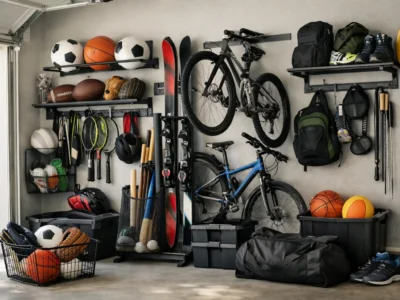
A busy family’s garage can collect an impressive amount of gear in a single season: soccer balls rolling beneath vehicles, bikes leaning against walls, hockey bags on the floor, and pool equipment buried behind holiday bins. Learning how to store sports gear garage families use every day is less about finding a place to pile it and more about creating a system that makes getting out the door easier.
The right storage plan protects expensive equipment, keeps walkways clear, and gives every family member a simple place to return what they use. It also helps your garage feel like a finished, functional part of the home rather than a catch-all for active life.
Start by Creating a Sports Gear Zone
Sports equipment is easier to manage when it is treated as its own storage category. Avoid scattering it between general household storage, tool areas, and seasonal décor. A dedicated zone gives equipment a predictable home and prevents the usual last-minute search for a missing cleat, helmet, or glove.
Begin by gathering every item currently stored in the garage. Sort it by activity, then by how often your household uses it. Baseball and soccer gear may need quick access during the school year, while skis, snowboards, and camping equipment can move to higher or less accessible storage during the off-season.
Be realistic about what is still in use. Outgrown helmets, broken racquets, duplicate balls, and gear from a sport no one plays anymore occupy valuable square footage. Removing those items first makes it possible to design storage around the equipment your family actually needs.
How to Store Sports Gear in a Garage by Frequency
The most dependable garage storage systems match access to use. Frequently used items should be easy for kids and adults to reach without dragging other equipment onto the floor. Seasonal items can be stored securely overhead or in enclosed cabinets until their season returns.
Think of your garage in three levels. The daily-use level is within easy reach, generally from the floor to shoulder height. This is where bikes, ball bags, protective gear, and practice equipment belong. The upper level is ideal for lighter, seasonal items that do not need weekly access. The lowest level should be reserved for equipment that is heavy, stable, and simple to pick up safely.
This approach prevents a common problem: storing a weekly-use soccer bag behind heavy holiday totes or placing a bulky cooler where it blocks access to bikes. A system should reduce friction, not create another obstacle course.
Keep Daily Gear Visible and Contained
Open wall storage is especially effective for the items that move in and out of the garage constantly. A professionally installed slatwall system with purpose-built hooks, baskets, and holders keeps gear off the floor while allowing everyone to see what is available.
Bikes can be positioned vertically on heavy-duty wall hooks to recover floor space. Helmets, gloves, and smaller accessories can sit in ventilated baskets nearby, so each bike has a complete grab-and-go station. Ball storage deserves special attention. A large open bin or ball corral keeps basketballs, soccer balls, and playground balls contained without requiring anyone to stack them precisely.
Visibility matters with children’s equipment. When a child can see where a helmet or tennis bag belongs, returning it becomes much more likely. The goal is not perfection. The goal is a storage layout that is easy enough to use on a rushed weekday afternoon.
Protect Seasonal and Specialty Equipment
Seasonal gear often takes up more room than expected. Skis, snowboards, fishing rods, golf clubs, paddleboards, and camping supplies all need storage that protects them from damage while freeing the garage for everyday traffic.
Overhead storage racks are a strong option for durable bins and seasonal equipment that can be safely lifted and retrieved. They use ceiling-level space that would otherwise go unused, helping homeowners reclaim room below for vehicles, work areas, and active gear. Professional design is particularly valuable here because rack placement, capacity, and clearance need to work with the garage’s layout.
For equipment that benefits from a cleaner, more protected environment, custom cabinetry is often the better fit. Enclosed cabinets reduce visual clutter and keep gear away from dust, pests, and accidental bumps. Golf equipment, fishing tackle, swim supplies, and athletic shoes can all be organized inside cabinets with shelves sized for the household’s actual collection.
Choose Storage That Can Handle the Weight
Sports gear is rarely as lightweight as it looks. A set of bikes, a packed hockey bag, a kayak accessory bin, or multiple baseball bags can add significant weight quickly. Standard household organizers are not designed for every garage environment or every load.
Heavy-duty shelving, durable wall systems, and professionally mounted bike storage provide the support active families need. Quality matters because storage is used repeatedly, often by children, and usually at the busiest moments of the week. A loose hook or overloaded shelf is not simply inconvenient. It can become a safety concern.
Consider the condition of the items being stored as well. Moist cleats, wet towels, pool toys, and sweaty pads should have room to air out before they go into enclosed storage. Ventilated baskets and open wall accessories are useful for this purpose. Once items are dry, they can return to their assigned cabinet, bin, or rack.
Make the Layout Work for the Whole Family
The best sports storage plan does not require one organized adult to manage everything. It gives each family member a clear responsibility and an easy route to follow.
Place children’s most-used gear at a height they can reach. Store adult equipment, heavier items, and sharp accessories higher or behind cabinet doors. Keep a clear pathway from the parking area to the sports zone so loading the car does not involve stepping over bats, balls, or bags.
It also helps to group equipment by the way your family leaves the house. For example, a bike station can include bikes, helmets, locks, and water bottle carriers in one area. A team-sports station can hold ball bags, cleats, jerseys, folding chairs, and coolers nearby. When everything for an activity is together, practices and weekend games require less preparation.
Labeling can help, especially for closed bins and cabinets, but labels are not a substitute for good design. If the right storage location is inconvenient, labels will not solve the problem. Prioritize logical placement first.
Plan for the Gear You Will Have Next Year
Families rarely stay at the same gear level for long. Children take up new sports, teenagers need larger equipment, and hobbies tend to multiply. A storage plan built only for today can become crowded quickly.
Choose adaptable systems that can be reconfigured as your needs change. Slatwall accessories can move as equipment changes. Adjustable shelving can accommodate taller bins or larger bags. Custom cabinetry can provide a polished foundation for items that need to stay protected and out of sight. Overhead racks can absorb the seasonal overflow that otherwise consumes usable floor space.
This is where a professional garage design earns its value. Rather than buying isolated organizers and hoping they fit together, homeowners can create a complete storage plan around their available space, household routines, and long-term needs. Garaginization designs and installs coordinated garage systems that give sports gear a durable home without sacrificing the clean, finished appearance homeowners want.
A Garage That Supports Active Family Life
A well-organized sports gear area changes more than the appearance of the garage. It makes it easier to leave on time, easier to put equipment away, and easier to protect the gear your family has invested in. It also gives your vehicles, hobbies, and household storage the space they deserve.
When every ball, bike, bag, and helmet has a designated place, the garage becomes part of the routine that keeps an active household moving – not the place where that routine gets stuck.
 How to Maximize Garage Wall Space Effectively