

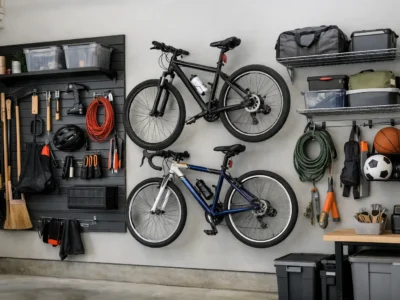
A garage can look full long before it is actually out of space. The problem is usually that bicycles, rakes, sports equipment, bins, tools, and seasonal items have claimed the floor while the largest usable surface in the room sits empty. Learning how to maximize garage wall space changes that equation. It creates clear floor area for vehicles, keeps everyday gear accessible, and gives the garage the finished, orderly appearance a busy household needs.
The best results do not come from putting something on every inch of wall. They come from designing storage around what your family owns, how often you use it, and where each item should live for safe, easy access.
Start With the Floor, Not the Wall
Before choosing wall-mounted systems, identify what is currently taking up floor space. Most garages collect a mix of daily-use items, occasional-use equipment, and things that have not had a designated home since the last move or home project. Sorting these categories first reveals which belongings truly deserve prime wall space.
Frequently used items should be easiest to reach. Think school-day backpacks, sports bags, gardening tools, folding chairs, helmets, and basic household supplies. Seasonal decor, camping equipment, archive boxes, and bulky overflow can move higher or into enclosed storage. This simple distinction prevents a common mistake: using the most convenient wall locations for items that are only needed twice a year.
A professional in-home design consultation can also account for vehicle clearance, walkways, electrical outlets, hose connections, and the swing space needed around cabinets or work areas. Wall space is valuable, but it should never come at the cost of a garage that feels cramped or difficult to use.
How to Maximize Garage Wall Space With Zones
The most efficient garage walls are organized by purpose rather than by item type alone. A family may need a sports zone near where children enter the home, a garden zone close to outdoor access, a tool zone near a workbench, and a seasonal storage zone in a less convenient location. When equipment returns to the same zone every time, keeping the garage organized becomes far easier.
Begin by reserving one wall or wall section for the items you reach for every week. This is an ideal area for slatwall panels with adjustable accessories, since hooks, baskets, and holders can be repositioned as your family’s routines change. A dedicated place for each item also means fewer loose objects leaning in corners or piled on top of one another.
Use another section for enclosed cabinetry. Cabinets create a clean visual finish while concealing paint supplies, cleaning products, automotive items, hobby materials, and household extras. They are particularly useful for families who want a polished space instead of an exposed collection of bins and tools. Cabinet interiors can be configured to support the items being stored, rather than forcing everything into one-size-fits-all compartments.
For larger, heavier supplies, professionally installed heavy-duty shelving provides a dependable middle ground between floor-level clutter and hard-to-reach overhead storage. The right shelf height depends on what it will hold. Items used monthly should generally stay within comfortable reach, while less-frequent items can occupy higher shelves.
Match Each Storage System to the Item
Wall space works best when the storage solution matches the shape, weight, and frequency of use of the item. Treating every belonging as a box creates wasted capacity. A well-planned combination of cabinets, slatwall, shelving, and overhead racks uses the full height of the garage without making access frustrating.
Use Slatwall for Flexible, Visible Storage
Slatwall is especially effective for long-handled tools, ladders, extension cords, sports gear, and other awkward items that do not stack well. Instead of resting these pieces against a wall, where they can slide, tangle, or create a tripping hazard, purpose-built accessories hold them securely in a defined position.
Its advantage is flexibility. As children grow, hobbies change, or a new piece of equipment comes home, accessories can be adjusted without redesigning the entire wall. For active families, that adaptability is a meaningful long-term benefit.
Use Cabinets to Reduce Visual Clutter
Not everything needs to remain visible. Custom cabinetry is the strongest choice for items that are useful but not attractive, as well as materials that should be kept away from children and pets. Closed cabinets make the garage feel more like an intentional extension of the home.
Cabinet placement matters. Tall cabinets can make productive use of vertical height, while lower cabinets can create a sturdy base for a workbench. The trade-off is access: very tall storage is excellent for reserve supplies but should not hold items you need every day.
Use Heavy-Duty Shelving for Bulky Categories
Shelving is often the right answer for clearly defined groups of larger items, such as labeled seasonal bins, coolers, paper goods, and outdoor supplies. Open shelves make it easy to scan what you have, which can prevent duplicate purchases and reduce the time spent looking for a particular container.
Avoid turning shelves into catch-all ledges. Consistent bin sizes, visible labels, and a practical limit on how high items are stacked help preserve the benefits of the system. If a shelf is difficult to reach or overloaded, it will quickly become another source of clutter.
Put Long-Term Storage Overhead
Overhead storage racks preserve wall space for the items you use more often. They are well suited to holiday decorations, luggage, keepsakes, and other belongings that do not need weekly access. This is one of the best ways to reclaim square footage without asking a family to part with items they still value.
Overhead storage must be designed around clearance and load requirements. It should be professionally planned and installed to ensure the rack is properly secured and that stored items do not interfere with vehicles, lighting, or normal movement through the garage. This is not an area where guesswork belongs.
Use Vertical Height Without Sacrificing Access
A tall garage wall can hold far more than a short row of hooks. The key is to create layers of access. Keep daily items low to mid-height, monthly-use gear higher up, and long-term storage at the top. This approach makes the room work harder while protecting your time and your back.
Consider who will use each section. Children should be able to return their own sports equipment to appropriate lower-level hooks or baskets. Adults can access tools and household supplies at mid-height, while high storage remains reserved for items that require a step stool or ladder. Accessibility is not just convenient. It is what makes an organization system sustainable after the initial cleanup is finished.
Plan for Weight, Safety, and Durability
Garage storage has to handle more than light household accessories. Full storage bins, power tools, yard equipment, and recreational gear can add significant weight. Quality materials and proper installation protect your investment and help prevent sagging, shifting, or damaged walls over time.
This is where a professionally designed system has a clear advantage. An experienced team evaluates the wall structure, the expected load, the best fastening locations, and the right product for each application. The goal is not simply to hang more items. It is to create storage that remains stable, safe, and attractive through years of family use.
A premium system also allows the design to evolve without looking pieced together. Coordinated cabinetry, shelving, slatwall, work surfaces, and flooring create a finished environment rather than a garage filled with unrelated storage pieces.
Leave Room for the Garage You Want to Use
Maximizing wall space should give the garage more function, not turn it into a storage warehouse. Protect an open area for parking, projects, fitness equipment, or a child’s bike repair station if those uses matter to your household. The best design balances storage density with breathing room.
Garaginization designs garage systems around the way each family actually lives, from heavy-duty storage for household overflow to accessible zones for sports and hobby equipment. A tailored plan can turn walls that currently collect clutter into dependable, high-capacity storage that supports the entire home.
A garage should make the morning routine easier, not add another obstacle to it. When every wall has a purpose and every category has a home, the space becomes easier to maintain and far more enjoyable to walk into.
 Custom Garage Cabinets Orlando Homeowners Trust