

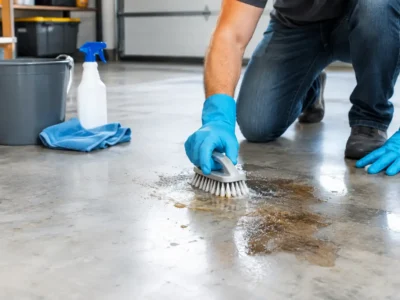
A clean garage can still feel unfinished when dark oil spots, orange rust rings, and stubborn tire marks are spread across the concrete. To remove garage floor stains effectively, you need to identify what caused them before reaching for a cleaner. The wrong product can leave a stain untouched, push oil deeper into porous concrete, or damage an existing floor coating.
For a garage that serves as storage, a workspace, and the daily launch point for an active family, floor care is about more than appearance. A clean, sealed surface is easier to maintain, safer underfoot, and better suited to the polished organization systems above it.
Start by Identifying the Garage Floor Stain
Concrete is porous. It absorbs liquids quickly, especially when it has never been sealed or its protective coating has worn down. That is why an oil leak can become a dark shadow rather than a surface spill, and why fertilizer, metal tools, and wet sporting equipment can leave discoloration behind.
Fresh stains are always easier to treat than old ones. If the spill is recent, blot it right away with shop towels or absorbent material. Avoid scrubbing immediately. Scrubbing a fresh oil spill can spread it across a larger area and force it farther into the concrete.
Most garage floor stains fall into a few categories: petroleum-based stains from oil, grease, or transmission fluid; rust stains from metal and moisture; paint spills; tire marks; and organic stains from leaves, soil, or lawn products. Each needs a different approach.
Check Whether Your Floor Is Bare Concrete or Coated
Before using any cleaner, confirm the condition of the surface. Bare concrete can tolerate stronger degreasers and targeted stain treatments, although harsh acids still require caution. A professionally applied epoxy or polyaspartic floor has a protective layer that calls for gentler, manufacturer-approved cleaning products.
If water beads up rather than soaking in, the floor is likely sealed or coated. If it darkens the concrete within a few minutes, the surface is more absorbent and may need a deeper treatment. When you are uncertain, test any product in an inconspicuous corner first.
How to Remove Garage Floor Stains From Oil and Grease
Oil and grease are the most common garage stains and often the most frustrating. The goal is to draw the oil out of the concrete, not simply make the surface smell cleaner.
Begin by covering the stained area with an absorbent material such as clay-based cat litter or a commercial oil absorbent. Let it sit for several hours or overnight, then sweep it up. For a fresh spill, this step alone may make a significant difference.
Next, apply a concrete-safe degreaser according to the label directions. Give it time to work before scrubbing with a stiff nylon brush. Nylon is a better choice than wire because it cleans without leaving metal fragments that may later rust. Rinse with a small amount of water and collect the runoff with towels, a wet vacuum, or additional absorbent material. Do not let oily wastewater flow into the street or a storm drain.
Older spots may need two or three treatments. For stains that remain dark after degreasing, use a poultice-style oil stain remover designed for concrete. These products typically dry over the stain and lift embedded oil as they cure. They are slower than a quick scrub, but they are often the best option for deeply absorbed petroleum stains.
Avoid using gasoline, brake cleaner, or other flammable solvents. They create a serious safety hazard, release harsh fumes, and can spread the stain instead of removing it.
Treat Rust, Paint, and Tire Marks Carefully
Rust stains require a product made specifically for rust removal on concrete. These cleaners are often acid-based, so follow the instructions closely, wear gloves and eye protection, and keep the area well ventilated. Apply only to the stain, allow the recommended dwell time, gently agitate if directed, and rinse thoroughly. Strong acid treatments can etch concrete or dull a coating, so more is not better.
For dried latex paint, start with warm water, mild detergent, and a plastic scraper. Work patiently rather than trying to chip at the concrete with metal tools. Oil-based paint may require a paint remover rated for masonry, but that should be used carefully and tested first, particularly on a coated floor.
Tire marks are usually caused by plasticizers in hot tires transferring to the floor surface. A pH-neutral cleaner or mild degreaser can often lift them from coated flooring. On bare concrete, a stronger concrete cleaner may be needed. If tire marks return in the same parking location, the issue is not poor cleaning. It may be a sign that an aging or unprotected floor needs a more durable finish.
Do Not Combine Cleaning Chemicals
It can be tempting to layer products when a stain does not respond immediately. Resist that urge. Combining cleaners, especially bleach, acids, and ammonia-based products, can create dangerous fumes or reactions. Use one product at a time, rinse fully, and allow the area to dry before trying another method.
When a Stain Will Not Come Out
Some stains become part of unsealed concrete over years of use. Old motor oil, battery acid damage, and repeated water intrusion can permanently alter the color and texture of the slab. At that point, aggressive cleaning may produce only a modest improvement while also leaving the floor uneven or etched.
This is where homeowners should weigh effort against a long-term solution. A high-quality garage floor coating can cover cosmetic discoloration while creating a nonporous, easy-to-clean surface. It also gives a finished garage a more intentional appearance, especially when paired with custom cabinets, overhead storage, slatwall, and a dedicated workbench.
A coating is not a shortcut for an unstable floor. Concrete should be evaluated and properly prepared first. Surface cracks, moisture concerns, previous coatings, and contaminated areas all affect whether the installation will perform as intended. Professional preparation matters because the coating is only as durable as the bond beneath it.
For homeowners who want a one-time-investment garage transformation, Garaginization can help coordinate a finished floor as part of a complete organization plan. The benefit is practical: when sports equipment, tools, seasonal bins, and household supplies have defined storage locations, there is less opportunity for leaks, wet items, and clutter to sit on the floor unnoticed.
Keep New Garage Floor Stains From Taking Hold
The best maintenance routine is simple enough to keep. Sweep grit and leaves regularly, since abrasive debris can wear away protective finishes. Wipe up vehicle fluids promptly, and place a drip mat beneath a vehicle with a known leak. Keep fertilizer, pool chemicals, paint, and lawn products on elevated storage rather than directly on the floor, where a damaged container can create a hard-to-remove stain.
Use a mild, floor-appropriate cleaner for periodic washing. High-pressure washing can be useful on bare concrete when handled carefully, but it is not automatically the right choice for every coated floor. Too much pressure, incorrect technique, or neglected edges can compromise a finish over time. A soft mop, gentle cleaner, and routine attention are usually all a protected floor needs.
If your garage has become a collection point for muddy cleats, damp camping gear, paint cans, and household overflow, the floor is carrying more than it should. Reclaiming vertical space and creating designated zones makes cleaning faster because there is less to move, fewer hidden spills, and more room to see the surface you are protecting.
A stain-free floor does not have to mean chasing perfection. It means having a garage that is clean enough to use confidently, organized enough to maintain easily, and finished enough to support the way your family actually lives.
 Are Garage Floor Coatings Slippery? What Matters