
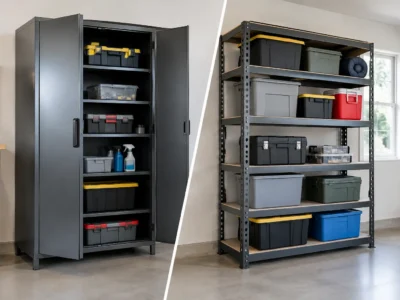
A garage can look organized for a weekend and still fail the Monday-morning test. If finding a soccer ball means moving paint cans, or holiday bins are blocking the tools you need, the issue is not simply a lack of storage. It is choosing the right kind of storage for the items your family actually uses. This cabinets shelving comparison explains where each system performs best and why many finished garages benefit from both.
Cabinets Shelving Comparison: Start With How You Use the Garage
Cabinets and shelving solve different problems. Cabinets create a clean, enclosed home for supplies you want out of sight. Shelving keeps large, bulky, or frequently handled items visible and within reach. Neither is automatically the better choice. The best fit depends on what you store, how often you access it, and how polished you want the finished space to feel.
For active households, garages often carry several jobs at once: sports equipment station, tool room, seasonal storage area, hobby workspace, and household overflow. A single storage product rarely handles all of that well. A professionally designed combination creates defined zones so every category has a logical place.
The goal is not to fill every wall. It is to reclaim usable floor space, make daily items easy to retrieve, and give the garage the finished appearance expected from a one-time investment.
When Garage Cabinets Are the Right Choice
Garage cabinets are built for homeowners who want visual order and protected storage. Their doors conceal the small containers, cleaning products, automotive supplies, hand tools, and miscellaneous items that can make open storage look crowded even when it is technically organized.
A cleaner look for everyday clutter
Cabinets are especially valuable along the wall nearest the home entry, where the garage is seen and used most often. Closed storage gives families a reset point: items go behind a door instead of accumulating on a workbench or floor. The result feels less like a utility room and more like a finished extension of the home.
They also make sense for categories that tend to multiply. Small hardware, garden accessories, car-care products, chargers, craft materials, and household supplies are easier to contain when they have a dedicated cabinet interior. Adjustable shelves allow the space to change as your needs change.
Protection from dust and visual clutter
Garages naturally collect dust, leaves, and debris brought in from outside. Cabinet doors offer an extra layer of protection for items you want to keep clean, including detailing products, power-tool cases, party supplies, and hobby equipment.
There is also a family-safety advantage. Potentially hazardous products can be placed up high or stored behind closed doors, away from younger children and pets. Cabinets are not a replacement for proper product handling, but they provide a more controlled storage environment than an exposed shelf.
Where cabinets have limitations
Cabinets are not always the most efficient home for oversized gear. Large coolers, bulky bins, folded camping chairs, and awkwardly shaped equipment can consume cabinet space quickly. Doors also need clearance to open, so cabinet placement must account for vehicles, walkways, and work areas.
Premium cabinetry is an investment because it delivers durability, adjustable organization, and a finished appearance. It is most valuable when assigned to the items that benefit from concealment and protection, rather than being used as the default solution for everything.
When Heavy-Duty Shelving Makes More Sense
Heavy-duty shelving is designed for capacity, visibility, and fast access. It is a strong choice for durable items that come in large containers or are used often enough that opening a cabinet door becomes an unnecessary extra step.
Better access for large and frequently used items
Think of storage totes, sports bins, coolers, folded chairs, landscaping supplies, and equipment cases. These items are often easier to lift onto an open shelf than to fit inside a cabinet. When shelving is properly planned, each shelf height supports the items it holds instead of forcing families to stack bins wherever they happen to fit.
Open shelves can also simplify routines. A clearly labeled row for practice gear means children can grab what they need without searching through a cabinet. A shelf near a workbench can keep commonly used tools and materials close at hand. For busy households, that accessibility matters.
High capacity without hiding the essentials
Quality garage shelving is engineered to handle serious weight, but capacity should never be assumed. The shelf system, wall anchoring, load distribution, and intended contents all matter. Professional planning helps ensure heavy bins, tools, and household supplies are stored securely rather than placed on a system that was never designed for the load.
Shelving works best when it remains intentional. A few well-defined categories are easier to maintain than a wall of mixed bins and loose items. Clear containers, consistent labels, and grouping similar belongings together help open storage look organized rather than exposed.
Where shelving has limitations
The trade-off is visibility. Shelving puts everything on display, including clutter. If your garage contains mismatched containers, half-used supplies, or many small items, open shelving may create a busy look. Dust can also settle on stored belongings over time.
Shelving is usually not the first choice for chemicals, small household extras, or personal items you prefer to keep concealed. It is a powerful storage tool, but it does not offer the same finished visual effect as a wall of cabinetry.
The Best Garage Storage Plans Use Both
For many homeowners, the most effective answer in a cabinets versus shelving comparison is a balanced system. Cabinets manage the visual noise. Shelving carries the volume. Together, they allow each type of item to live where it makes the most sense.
A common layout might use base and wall cabinets to create a clean work zone, with a durable workbench for projects and repairs. Heavy-duty shelves can hold labeled seasonal bins, camping equipment, or larger household items nearby. Overhead storage can reserve ceiling-level space for belongings used only a few times a year, keeping them off the floor without occupying prime wall space.
Slatwall can complete the plan by organizing items that do not sit well on a shelf, such as sports gear, yard equipment, and frequently used tools. This approach gives every category a designated zone instead of asking cabinets or shelves to solve every storage problem alone.
Five Questions That Determine the Right Mix
Before selecting any garage storage system, consider these practical questions:
- What items do you access weekly, seasonally, or only a few times per year?
- Which belongings need to be concealed, protected, or kept away from children?
- How much weight will each storage area need to support?
- Which walls must remain open for parking, walking, or a work area?
- What level of finished appearance do you want when the garage is fully organized?
These answers reveal the difference between simply adding storage and creating a storage plan. For example, seasonal decorations may belong on overhead racks or high-capacity shelving, while cleaning supplies and small tools belong in cabinets. Bicycles and sports equipment may need wall-mounted solutions that preserve clear floor space.
Why Professional Design Changes the Result
Garage storage is not one-size-fits-all. The available wall space, ceiling height, vehicle footprint, door swing, electrical access, and family routines all influence what will work. A system that looks good in a photo can be frustrating if it blocks a parking path or places everyday gear out of reach.
A professional consultation evaluates the entire garage before recommending products. It also accounts for the items homeowners often forget to mention at first: the stroller, the golf clubs, the bulk paper goods, the school-project supplies, and the bins that move in and out with each season.
Garaginization designs and installs premium systems that combine cabinetry, heavy-duty shelving, overhead storage, slatwall, workbenches, and durable flooring into one coordinated plan. With trained employee installers and a focus on long-term performance, the objective is a garage that works hard without looking overloaded.
The right choice is the one that makes your busiest mornings easier and keeps your floor clear when the day is done. Start with how your family lives, then give every item a storage solution built for the job.
 Garage Layout Planning That Reclaims Your Space