

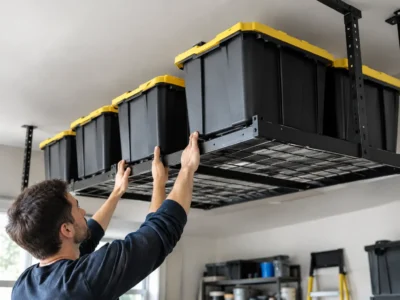
A stack of holiday décor, camping equipment, and outgrown sports gear can consume an entire wall before a family realizes how much floor space has disappeared. Can ceiling racks hold bins safely enough to solve that problem? Yes, provided the rack, the ceiling structure, the bins, and the installation are designed to work together. Overhead storage is one of the most effective ways to reclaim a garage, but capacity is not a guesswork issue.
A professionally planned overhead system turns unused vertical space into dependable storage for the items you need to keep but do not need every day. The key is matching what you store to what the system can safely support.
Can Ceiling Racks Hold Bins Safely?
Quality ceiling racks are made specifically to hold storage bins and other bulky household items. Many heavy-duty systems have substantial published weight capacities, but that number is only meaningful when the rack is secured correctly to suitable structural framing and loaded as intended.
The practical answer is not simply, “Yes, the rack can hold it.” It is, “Yes, when the full storage system has been evaluated.” A rack may be capable of carrying a large distributed load, while the bins themselves, their placement, or the ceiling attachment could still create a weak point. That is why premium overhead storage should be treated as a permanent home improvement system rather than a place to pile up extra belongings.
For most households, overhead racks are an excellent fit for seasonal decorations, labeled keepsake bins, camping supplies, coolers, luggage, and sports equipment used only during certain parts of the year. They are less suitable for items you need daily, very heavy loose materials, or anything that could leak, deteriorate in heat, or become difficult to handle safely at height.
What Determines How Much Weight an Overhead Rack Can Carry?
Weight capacity starts with the rack itself. A well-built system uses heavy-gauge steel construction, secure mounting hardware, and a design that distributes the load across multiple support points. Shallow, lightweight racks may work for a limited number of totes, while heavy-duty storage systems are engineered for larger loads and long-term use.
The ceiling matters just as much. Structural framing provides the support needed for overhead storage, but its layout and condition vary from one home to another. Mounting a rack in the correct locations is essential. Fastening into an unsuitable surface, missing the framing, or relying on hardware that is not rated for the intended load can compromise an otherwise strong rack.
Installation quality is the third part of the equation. The rack must be level, properly anchored, and installed with appropriate clearance from lighting, sprinklers, vents, and other overhead features. Professional installers evaluate these details before the system goes in, rather than discovering limitations after bins are already overhead.
Finally, capacity is based on distributed weight. A rack can support more safely when bins are spread evenly across its surface. Placing all of the heaviest containers in one area concentrates stress and can make access more awkward. Think of the published capacity as a total system limit, not permission to load one corner with dense, heavy containers.
Bin weight is often more important than bin size
Large plastic totes can be misleading. A 27-gallon bin filled with lightweight holiday decorations may be easy to manage, while the same-size bin filled with books, tile, hand weights, or dense tools can become far too heavy for convenient overhead storage.
Before moving bins upward, consider what is inside them. Containers holding textiles, decorations, pool accessories, seasonal clothing, paper goods, and many camping supplies are often ideal candidates. Dense materials deserve more caution. If a bin is difficult for one adult to lift and control from a step ladder, it is usually not a good choice for frequent overhead access.
The bin itself should be durable, have a secure lid, and maintain its shape when stacked or supported. Cracked plastic, warped lids, and overfilled containers increase the chance of damage during handling. Clear labels on the front and side also eliminate the need to pull down multiple containers just to find one item.
Choose the Right Bins for Ceiling Storage
Not every household item belongs overhead. The best approach is to organize by frequency of use, weight, and season. Keep daily-use items within easy reach in cabinetry, slatwall storage, or other accessible zones. Reserve ceiling racks for items that can stay stored for months at a time without creating an inconvenience.
For dependable bin storage, select containers that are consistent in size where possible. Matching totes create a cleaner finished appearance and use rack space more efficiently than a mix of irregular boxes and bags. They also make it easier to plan rows, leave safe clearance, and keep the load balanced.
Avoid storing fragile heirlooms, unsealed liquids, hazardous materials, or temperature-sensitive belongings overhead. Garages can experience significant heat, cold, and humidity changes depending on the climate. A durable rack protects against floor clutter, but it does not change the conditions inside the space.
It also helps to avoid filling every available inch. A little open space makes bins easier to retrieve and gives you flexibility as family needs change. The goal is not to hide clutter above your head. It is to create an organized storage zone where every container has a clear place and purpose.
Safe Loading Makes a Major Difference
Once a ceiling rack is properly installed, loading habits protect both the system and the people using it. Place heavier approved bins toward supported areas and distribute the total load across the rack. Keep similar categories together, such as holiday décor in one section and camping gear in another, so retrieval is predictable.
Use a stable ladder and have a second adult assist with bulky containers. Even a lightweight tote becomes awkward when lifted overhead. Never stand on unstable surfaces or try to slide heavy bins into place from an unsafe position. The convenience of overhead storage comes from getting low-priority belongings out of the way, not from rushing the loading process.
Review the rack periodically as well. Check that bins remain intact, labels are readable, and nothing has shifted. If your household has added heavy gear, changed seasonal storage needs, or accumulated more containers over time, reassessing the layout can prevent overloading and preserve the clean look of the garage.
Why Professional Design Is Worth It
The biggest benefit of professionally designed overhead storage is confidence. Instead of selecting a rack based only on a product description, homeowners receive a plan that accounts for their available ceiling space, the items they want to store, and the way their family uses the garage.
A thoughtful design also considers the rest of the room. Ceiling racks work best as part of a complete organization strategy, with accessible storage below for tools, hobby materials, sports equipment, and everyday supplies. This creates clear zones: frequently used belongings stay within reach, while bulky seasonal bins move overhead.
At Garaginization, trained installers help homeowners create a polished, high-capacity storage plan that is designed for real family life. The result is more usable floor space, less visual clutter, and storage that feels intentional instead of temporary.
When Ceiling Racks May Not Be the Best Fit
Overhead racks are highly effective, but they are not the right answer for every item or every ceiling. Limited clearance, unusual structural conditions, or a need for frequent access may point to a different storage solution. The same is true when a homeowner wants to store extremely heavy materials or needs all belongings within easy reach.
That is not a failure of overhead storage. It is a reason to plan storage by function rather than trying to make one product handle every need. A garage should support the way your household actually moves through the week, from busy school mornings to weekend projects and seasonal transitions.
The right ceiling rack can hold bins securely for years, provided it is professionally matched to the space and loaded with care. A consultation can turn that unused overhead area into a dependable part of a garage that finally has room to work for your family.
 What Homeowners in Dallas, Atlanta, Las Vegas, and Orlando Consistently Underestimate About Garage Floor Coating (Before They Commit)