
Project Timeline Overview: What to Expect
- Most custom garage organization projects run 3–6 weeks from consultation to completion, depending on scope, customization level, and whether flooring is included.
- The fabrication window — typically 2–4 weeks — is not a delay. It’s the reason the finished system fits your space exactly, with no filler panels and no compromises.
- Your decisions at the initial consultation have more influence over the final timeline than any variable on the installation side.
Most custom garage organization projects run three to six weeks from the initial consultation through the final installation day.
That window is not arbitrary. Every phase in it has a purpose. The consultation produces a design built around how you actually use your space. The fabrication period produces components manufactured to your exact dimensions. The installation day — or days — is when it all comes together in a garage that looks and functions like it was always supposed to.
If you’re planning a custom transformation in the DFW area and want to know exactly what you’re committing to, here’s how the process unfolds, phase by phase.
What the Complete Timeline Looks Like
| Phase | What Happens | Typical Timeframe |
| Consultation | On-site assessment, measurements, 3D design | ~1 hour on-site |
| Design & Fabrication | Custom manufacturing, finish selection | 2–4 weeks |
| Installation | Full install by in-house W2 crew | 1–3 days |
| Epoxy Curing (if applicable) | Cure time before garage use | 24–72 hours post-install |
Total from consultation to a fully operational garage: typically 3–6 weeks for a custom build.
Phase 1 — The Consultation: What Happens and How Long It Takes
The consultation is where the project takes real shape — not just logistically, but visually.
A Garaginization consultation typically runs about an hour on-site. The team walks the space with you, takes precise measurements, and asks questions about how the garage actually gets used: vehicles, equipment, workflow, what needs to be at arm’s reach versus what can live overhead.
From there, a 3D rendering is developed that shows your finished garage before a single board is cut. When you can see the actual layout — cabinet placement, shelving runs, flooring — you make better decisions about scope and priorities. Changes are straightforward at the design stage. After fabrication begins, they’re costly.
Does Every Project Require an In-Person Visit?
For any project involving custom garage cabinets or a full built-out storage system, yes. A phone consultation works for straightforward add-ons, but accurate measurements and a real read on how the space flows are what allow the team to design something that actually fits.
This is not a formality. Homeowners who bypass the on-site assessment routinely end up with systems that don’t account for existing obstructions, door swings, or the actual depth of their parking bays. The hour protects the outcome.
Phase 2 — Design, Fabrication, and Ordering
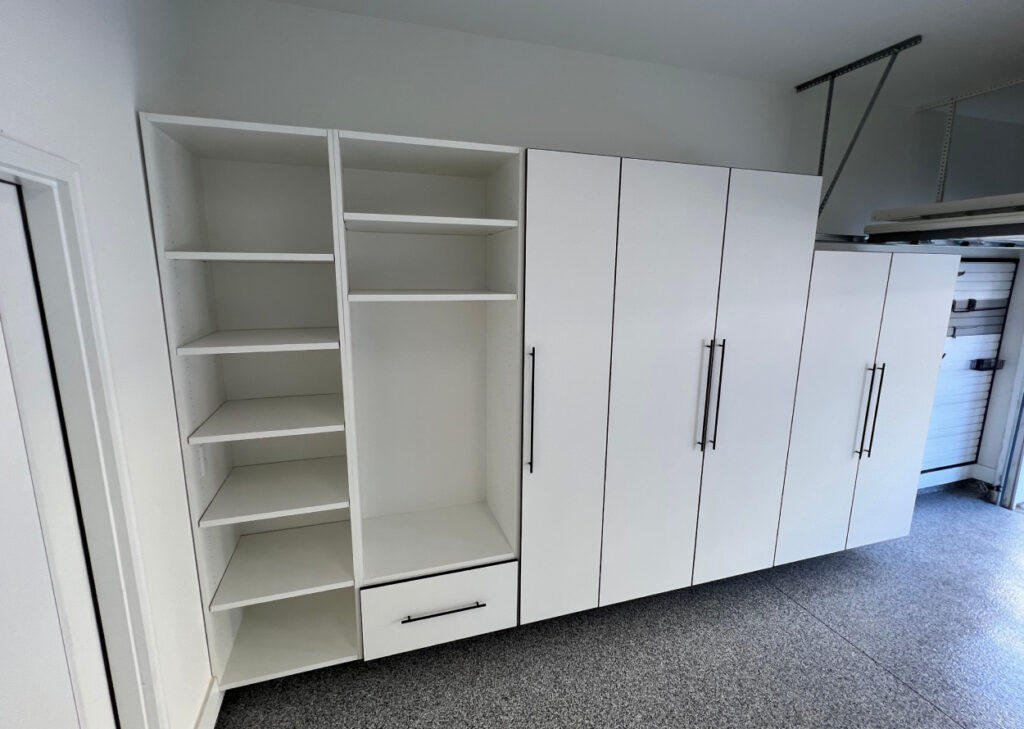
Once the design is approved, the build begins. For Signature Series and Elite Series garage cabinets — both available in fully custom sizes — fabrication typically takes two to four weeks.
That window is not a delay. It’s the reason the finished system fits your space precisely.
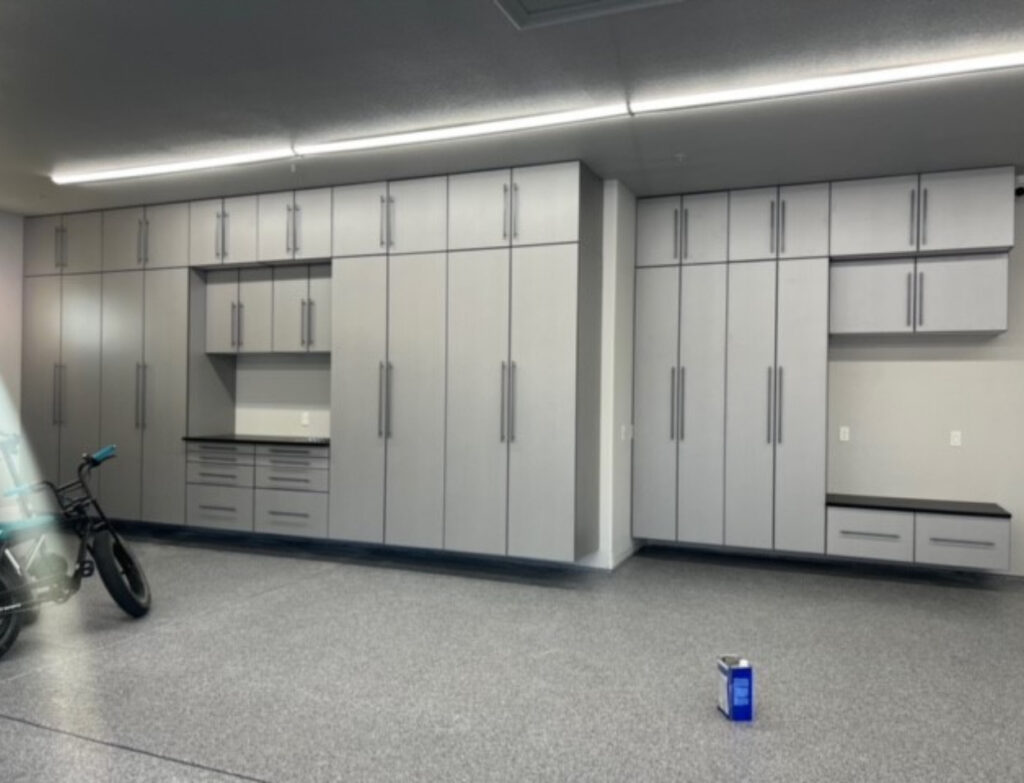
Custom fabrication means every component is manufactured to the measurements taken in your garage. No stock panels. No filler pieces shimmed into place because a standard size ran two inches short. No workarounds that look acceptable in a showroom and slightly off in your home.
Why Custom Fabrication Takes 2–4 Weeks (and Why That’s the Right Timeline)
The National Association of the Remodeling Industry (NARI) consistently notes that custom installation quality depends on adequate manufacturing lead time — and that projects where homeowners pressure-compress fabrication are far more likely to produce fit-and-finish dissatisfaction down the line.
Garaginization manufactures locally, which matters more than it might initially sound. Franchise competitors frequently depend on centralized distribution centers — sometimes several states away — which introduces scheduling variability they cannot fully control. A locally manufactured system leaves the shop when it’s ready, not when a regional logistics window allows it.
For DFW homeowners in Southlake, Keller, Frisco, and surrounding areas, that translates to more predictable scheduling and faster resolution if any adjustment is needed after installation.
The more custom the build, the more time fabrication requires. That time is what separates a system built for your garage from one built for someone else’s and resized to fit.
Ready to see your garage in 3D before we cut a single board? Schedule your free consultation— Garaginization has been serving DFW homeowners since 2008.
Phase 3 — Installation Day(s)
Installation is the fastest phase of the process, but “fast” is relative to scope.
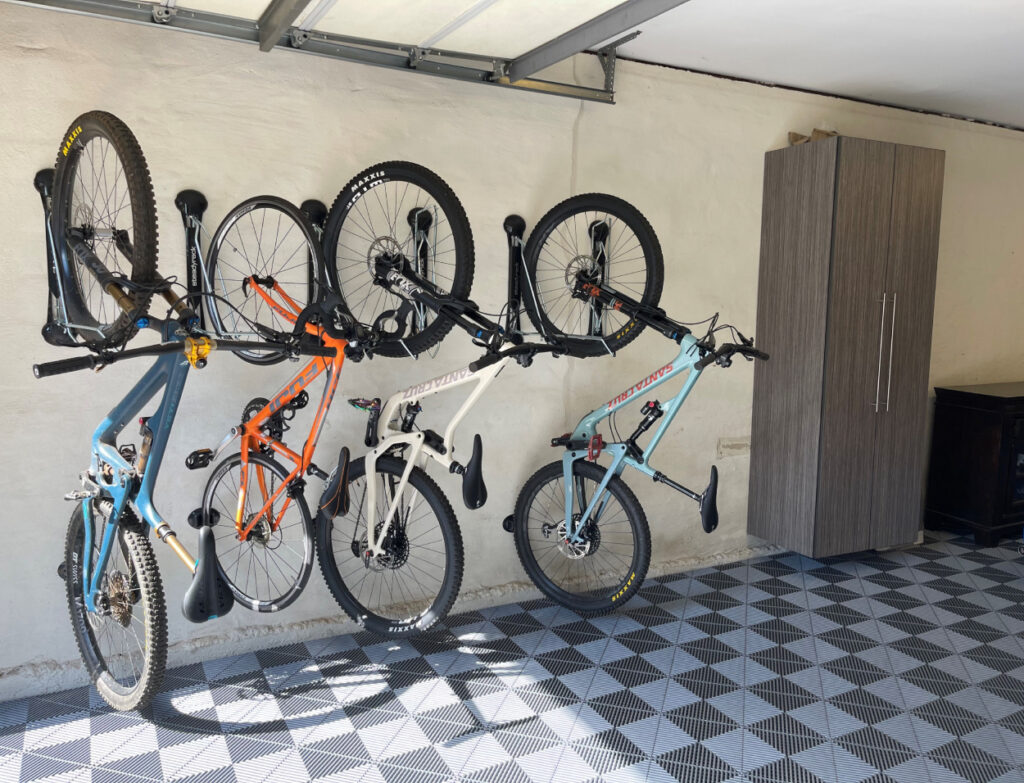
A focused installation — Monkey Bars shelving systems plus a wall cabinet run in a two-car garage — typically wraps in a single day. A full transformation covering overhead garage storage, a complete cabinetry wall, slatwall panels, and a workbench configuration will run two to three days.
Every installation is completed by Garaginization’s own W2 crew. No subcontractors, no day-labor handoffs, no situation where the installer showing up has never seen your design. The same team that consulted on and designed your project understands exactly how it’s meant to come together.
How Scope and Garage Size Affect Installation Time
A single-car garage with a focused storage build and no flooring: typically one day.
A three-car garage with full cabinetry, overhead storage, slatwall, and a dedicated workspace: plan for two to three days.
The variables that extend installation time most consistently are total component count, garage accessibility, and whether flooring is part of the project.
What Happens If Epoxy Flooring Is Part of the Project?
Adding epoxy garage floor coating is one of the highest-impact decisions in a full garage transformation — and it extends the overall project timeline by a few days.
Epoxy application requires the existing concrete to be diamond-ground before coating. This step opens the surface’s pores and ensures the coating bonds permanently rather than peeling within a few years the way surface-applied products do. After application, the floor needs 24 to 72 hours to cure before it can handle foot traffic and vehicle weight.
Plan for the garage to be out of service for two to three days post-coating. The result is a floor built to outlast the mortgage.
What You Can Do to Keep Your Project on Schedule
Most timeline extensions in a custom garage project trace back to deferred decisions — not to anything in the fabrication or installation process.
Here’s where the schedule is actually in your hands:
- Lock in your scope at the consultation. Adding overhead storage or a workbench after fabrication has begun restarts part of the production run. Know your priorities before the first visit.
- Make finish and color selections early. Delayed finish decisions are the most common source of timeline extension. Garaginization’s team walks through all options at the consultation — come ready to decide.
- Clear the garage before installation day. The crew cannot install around vehicles, stored equipment, or boxes. A clear space lets them start immediately and stay on schedule.
- Confirm your flooring decision before fabrication begins. Cabinetry and epoxy flooring installation are sequenced. Changing course mid-fabrication affects both.
The homeowners who move through the process most efficiently treat the consultation like a project kickoff, not an exploratory conversation. Arrive with a working sense of what you want the garage to do — even roughly — and the design phase moves fast.
The Timeline Is Worth It
A custom garage organization project running three to six weeks is not a long investment for a system you’ll use every day for the next twenty years.
When the installation crew wraps up and the floor has cured, what you have is a garage designed for your specific space, fabricated to exact dimensions, and installed by the same team that built it — with no franchise handoffs, no subcontractors, and no stock components forced into places they weren’t made for.
That’s the standard Garaginization has held since 2008, backed by an A+ BBB rating across more than 18 years of installations across the DFW area.
Schedule Your Free Consultation
The first step takes about an hour and ends with a 3D rendering of your finished garage — before any commitment is made.
Schedule your free garage consultation with Garaginization. The team will assess your space, walk through your design options, and give you an accurate project timeline based on your specific scope — not a generic estimate.
Serving Southlake, Keller, Frisco, Prosper, and the surrounding DFW area since 2008.
Frequently Asked Questions
How long does a custom garage cabinet installation take from start to finish?
Most custom garage organization projects run three to six weeks from the initial consultation to the final installation day. That window includes the on-site consultation and 3D design phase, a two-to-four-week fabrication period for custom-sized components, and one to three installation days depending on the project scope.
Do I need to empty my garage before the installation crew arrives?
Yes. The installation crew needs a clear workspace to work efficiently and safely. Vehicles, stored items, and equipment should be moved out before the crew arrives. A cleared garage allows the team to begin immediately and keeps the project on schedule.
How long does epoxy garage flooring need to cure before I can use my garage?
Epoxy floor coatings require 24 to 72 hours to cure before the garage can handle foot traffic and vehicle weight. The exact cure time depends on the specific coating system and conditions. Garaginization diamond-grinds every floor before coating to ensure a permanent bond — a step frequently skipped by lower-quality operators, and the primary reason surface-applied epoxy jobs peel within a few years.
 The Garage Cabinet Installer Hiring Checklist: What Dallas Homeowners Need to Ask Before They Sign Anything