

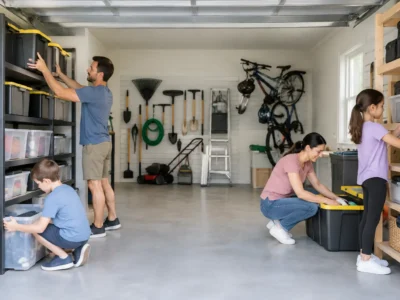
A garage can hold far more than vehicles, but it should not become the place where every spare item disappears. The best garage organization examples make daily life easier: bikes are ready for the weekend, tools have a dependable home, seasonal bins stay accessible, and the floor remains clear enough to use the space as intended.
For active households, the goal is not simply to hide clutter. It is to create a finished, high-capacity system that matches how the family actually lives. These examples show how professionally designed garage storage can turn overflow into a practical, polished extension of the home.
Garage Organization Examples That Solve Real Problems
1. A wall of cabinets for household overflow
A continuous run of garage cabinets is one of the most effective ways to contain the items that do not belong in a kitchen, closet, or living room. Think paper goods, cleaning supplies, holiday décor, paint, pet supplies, and the small appliances that only come out a few times a year.
Cabinets create visual calm because the contents are behind closed doors. They are also a strong choice for homeowners who want a finished appearance rather than open storage on every wall. A professional design can mix full-height cabinets with base cabinets and countertop space, so frequently used items remain within reach while less-used belongings move higher.
2. Heavy-duty shelving for large storage bins
Clear bins are useful only when there is a safe, logical place to keep them. Heavy-duty shelving gives labeled containers a dedicated home and makes it easier to see what the household owns before buying another duplicate.
This approach works especially well for seasonal categories: winter gear, pool supplies, camping equipment, party décor, and keepsakes. The key is capacity. Garage shelving should be designed for the actual weight and volume of stored items, not just what fits on a shelf at the moment. Professional-grade systems help prevent bowed shelves, unstable piles, and difficult access.
3. Overhead racks for long-term seasonal storage
Overhead storage is ideal for belongings that need to stay, but do not need to be available every week. Holiday decorations, luggage, archival bins, and seasonal sports equipment can move above the main storage zone, releasing valuable wall and floor space below.
The trade-off is accessibility. Overhead racks are not the best place for items used daily or by children. They are most successful when homeowners reserve them for lightweight-to-manage bins and clearly label every container. A carefully planned installation also considers clearance, load capacity, and the room needed to park comfortably.
4. A slatwall zone for everyday grab-and-go gear
Slatwall provides flexible vertical storage for the things families reach for often. Hooks, baskets, and specialty accessories can hold backpacks, folding chairs, helmets, garden tools, hoses, and hand tools without forcing everything into a cabinet.
A well-designed slatwall section is more than a collection of hooks. It creates a visible landing zone where equipment can be returned after use. That matters on busy school mornings and after weekend activities, when the easiest system is the one everyone will actually follow.
5. A dedicated bike storage area
Bikes consume a surprising amount of floor space, particularly when several family members ride. A vertical bike storage area keeps wheels from leaning into parked vehicles, tangling with sports gear, or falling over when someone reaches for another item.
Placement matters. If bikes are used several times a week, keep them near the front or side of the garage where they can be removed without rearranging the room. For seasonal riders, a higher or less central position may make better use of the available footprint.
6. A sports station that keeps equipment together
Sports equipment tends to scatter because it comes in many shapes and is used by multiple people. A dedicated station can include ball storage, hooks for bags, shelves for cleats, and baskets for smaller items such as gloves and protective gear.
This is one of the most family-friendly garage organization examples because it reduces the last-minute search before practice. When each activity has a defined zone, children can participate in putting equipment away, and parents can quickly see what needs to be replaced or cleaned.
7. A workbench built for real projects
A durable workbench gives tools and repair projects a permanent home instead of allowing them to spread across every available surface. Base cabinets below the bench can store larger tools and supplies, while a slatwall backdrop keeps frequently used hand tools visible and organized.
The right workbench depends on how it will be used. A homeowner who handles occasional household repairs may need a compact, clean surface. Someone with an active hobby may need deeper countertops, more task storage, and room for equipment. Designing around the work itself makes the area more useful and safer.
8. A garden care zone near the exterior access point
Lawn and garden supplies are easiest to manage when they are grouped close to where they are used. Long-handled tools can hang vertically on slatwall, while soil, gloves, pots, and smaller supplies fit neatly in cabinets or shelving.
This arrangement limits dirt and debris from traveling through the rest of the garage. It also prevents yard equipment from occupying the same space as household storage or hobby supplies. Separating zones gives the garage a more intentional flow.
9. A pet supply cabinet that stops the clutter trail
Leashes, food containers, grooming supplies, towels, and travel accessories can create a steady stream of clutter near the entry from the garage. A small cabinet zone keeps those necessities contained and convenient.
For many families, this is a simple addition with an immediate payoff. A countertop can serve as a place to set down bags after a walk, while enclosed storage keeps food and cleaning products orderly. It is a practical example of designing around routines rather than just possessions.
10. A clean drop zone for backpacks and household essentials
The garage is often the real family entry point. A drop zone with hooks, baskets, and a small counter or cabinet section can catch backpacks, reusable shopping bags, shoes, and other items that otherwise migrate into the house.
This type of organization is particularly helpful when paired with a clear rule: each item gets put away before anyone heads inside. The system does not need to be complicated. It needs to be close to the path people already take and sized for the number of people using it.
11. A flex wall for hobbies and changing needs
Some garage storage needs are permanent. Others change as children grow, hobbies evolve, or a household adds new equipment. A flex wall built with slatwall and adjustable accessories gives homeowners room to adapt without sacrificing a finished look.
For example, a section that holds scooters and helmets today may later become storage for golf equipment, crafting materials, or travel gear. This flexibility is valuable, but it should still be part of an overall plan. Too much open, undefined storage can quickly become another catch-all.
12. Durable flooring that completes the transformation
Organization works better when the room feels worth maintaining. Durable garage flooring creates a clean, finished foundation that stands up to everyday traffic, spills, and the movement of equipment. It also makes sweeping and cleanup easier, which helps prevent clutter from becoming permanent.
Flooring is not just an aesthetic upgrade. It brings the entire design together, especially when cabinets, shelving, and wall systems are arranged around clear pathways. The result is a garage that feels like usable square footage, not leftover space.
How to Choose the Right Garage Organization Plan
The strongest garage organization plan starts with use patterns, not products. Consider what comes in and out of the garage each week, what needs to be hidden, what must be accessible, and which belongings are truly worth keeping. A family with multiple athletes will need a different layout than a household focused on tools, gardening, or holiday storage.
It also helps to think in zones. Daily-use equipment belongs at comfortable reach. Heavy or bulky items need secure, high-capacity support. Long-term storage can move overhead or higher on the wall. This approach protects open floor space and makes it easier to maintain order after the initial transformation.
A free in-home consultation can turn those decisions into a design that fits the garage dimensions, household routines, and storage priorities. Garaginization combines premium cabinetry, shelving, overhead racks, slatwall, workbenches, and durable flooring into professionally installed systems built for long-term use.
The best result is not a garage that looks organized for one weekend. It is a garage that gives every member of the household a clear place to put things, making the next busy morning, family outing, or home project noticeably easier.
 Slatwall Panels That Put Your Garage to Work