
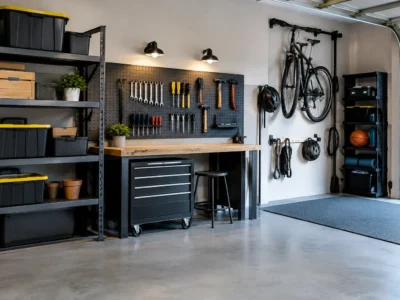
A garage becomes frustrating when everything has a place, but nothing has a purpose. Bikes lean against boxes, lawn equipment blocks the tools, and the item you need is always behind three items you do not. Learning how to create garage zones changes that pattern by giving every part of the garage a specific job.
The goal is not simply to make the room look cleaner. A well-planned zone system makes daily routines faster, keeps heavy items stored safely, protects valuable equipment, and gives your family usable floor space again. The most effective designs account for what your household owns, how often you use it, and where it makes sense to access it.
Start With How Your Family Uses the Garage
Before selecting cabinets, wall systems, or overhead racks, look at the real activity in the space. A family with young athletes needs a different layout than a homeowner who restores cars, maintains a detailed yard, or uses the garage as a hobby workspace.
Walk through the garage and identify what comes in and out regularly. Consider tools, gardening supplies, sports equipment, bicycles, camping gear, seasonal decor, household bulk purchases, and hobby materials. Then think about the path each category takes. Equipment used near the driveway should not require walking around a workbench. Holiday bins should not occupy the most convenient storage area in July.
Frequency should guide placement. Daily and weekly items belong within easy reach. Monthly and seasonal items can move higher or farther back. This simple rule prevents the common problem of storing rarely used items in prime locations while everyday gear ends up on the floor.
How to Create Garage Zones Around Daily Tasks
A garage zone is a dedicated area designed for a particular category or activity. The right zones depend on the household, but most organized garages benefit from a combination of active-use areas and long-term storage areas.
The arrival zone
The arrival zone handles the items that come and go most often: backpacks, shoes, helmets, sports bags, reusable shopping bags, and pet supplies. Place it near the most natural entry point into the home or along the route your family already uses.
This zone works best when it is easy to maintain. Wall-mounted hooks, bins, and adjustable slatwall accessories keep gear visible and off the floor. For active families, assigning a designated hook or basket to each person can eliminate the daily pileup that tends to migrate across the garage.
The sports and recreation zone
Sports equipment is awkward by nature. Balls roll, racquets tangle, and helmets disappear into crowded shelves. A dedicated recreation zone keeps these items together so children and adults can find what they need without opening every cabinet.
Vertical storage is especially useful here. Bikes, scooters, and other large equipment can be stored securely along a wall when they are not in use, preserving open floor space. Adjustable wall accessories also allow the zone to change as children grow, sports seasons change, or a new hobby takes hold.
The tool and project zone
Tools need a controlled home, not a collection of miscellaneous drawers. A tool and project zone should provide durable cabinetry for secure storage, a workbench with a clear work surface, and wall storage for frequently used hand tools.
Keep this zone separate from children’s gear and general household overflow. That improves access for projects while helping reduce safety concerns around sharp, heavy, or chemical-related items. Closed cabinets are particularly valuable for supplies that should not be within easy reach of children or pets.
The size of this area depends on the work you actually do. A homeowner who occasionally hangs a picture needs less bench space than someone who repairs equipment or spends weekends on hands-on projects. A professional design can balance that need without allowing one hobby to take over the entire garage.
The lawn and outdoor zone
Rakes, shovels, leaf blowers, hoses, and yard-care equipment need a dedicated location because they are bulky and often dirty. Store these items close together, ideally near the part of the garage that gives the most direct access to the yard.
A wall-based system keeps long-handled tools upright and visible rather than buried in a corner. Heavy-duty shelving or enclosed cabinetry can hold bags of supplies, cleaning products, and accessories. This arrangement also makes seasonal transitions easier: summer equipment stays accessible during the warm months, while cold-weather tools move forward when needed.
The seasonal storage zone
Seasonal items are essential, but they should not dictate the layout of the entire garage. Holiday decor, luggage, coolers, winter clothing, and keepsake bins belong in a high-capacity zone that does not interfere with everyday movement.
Overhead storage racks are often the best solution for this category because they use open space above the floor. They are ideal for labeled bins and lighter, infrequently accessed belongings. Weight capacity, installation quality, and clear access matter here. A rack should be engineered and professionally installed for the load it will carry, not treated as a catch-all for anything that does not fit elsewhere.
Build Zones From the Floor Up
The floor is your most valuable square footage. Protect it for parking, movement, and activities that require open space. If the floor is crowded with bins, bikes, and equipment, the zone plan is working against you.
Move appropriate categories upward and outward. Cabinetry creates concealed storage for visual calm. Slatwall turns unused wall space into flexible storage. Overhead racks handle seasonal bins. Together, these systems create distinct homes for belongings without making the garage feel closed in.
Durable garage flooring supports the plan as well. A finished floor is easier to clean, stands up to daily wear, and visually defines the garage as an intentional extension of the home. It also makes clutter more noticeable, which is helpful once every category has a proper place.
Give Each Zone a Clear Boundary
Zones do not need physical walls, but they do need visual and functional boundaries. A cabinet run can define the tool area. A section of slatwall can establish the sports area. Overhead racks can separate long-term storage from active-use storage.
Labels are useful for bins that hold seasonal or shared items, especially when several family members use the garage. Keep labels broad enough to remain practical over time. “Camping” is more useful than listing every item inside a bin, and “holiday lights” is easier to find than “December decorations.”
Avoid creating too many tiny zones. An overly detailed plan can be hard to maintain. The best garage organization systems are specific enough to prevent clutter but flexible enough to accommodate new equipment, changing schedules, and the normal accumulation of family life.
Plan for Safety, Capacity, and Change
Garage storage has to do more than look polished. It must safely handle weight, withstand temperature changes, and support the way your household functions. Heavy items should stay low or be secured in systems designed for their load. Frequently used items should not require climbing, stretching, or moving multiple bins.
It also helps to leave room for change. Your child may trade a scooter for a bicycle. A new sport may bring more equipment. A home project may require additional tools. Adjustable systems and custom cabinetry make it possible to adapt without starting over.
This is where expert planning adds real value. A professional can measure the space, identify overlooked storage opportunities, recommend materials for the intended load, and create a layout that feels finished rather than pieced together. Garaginization designs garage systems around the needs of the household, helping homeowners create a one-time-investment solution that remains useful for years.
A well-zoned garage should make the next busy morning easier, not just make a good first impression. When every category has a purpose-built home, the garage becomes a place that supports your family’s routines, projects, and time together.
 Can Ceiling Racks Hold Bins? What to Know