
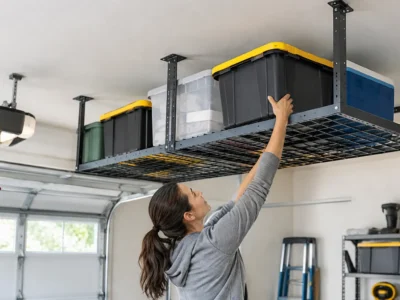
A garage floor fills up faster than most homeowners expect. One bike, a stack of holiday bins, camping equipment, sports gear, and a few bulky household items can quickly turn parking space into an obstacle course. To maximize garage ceiling space, look above the vehicles and use the area that is often left completely unused.
Ceiling storage can create meaningful capacity without crowding the areas your family uses every day. Done properly, it keeps large, seasonal, and less frequently needed belongings secure, visible, and out of the way. The key is not simply putting items overhead. It is designing a system around safety, clearance, access, and the way your household actually lives.
Why Ceiling Storage Changes How a Garage Works
The ceiling is one of the largest open surfaces in a typical garage, yet it is commonly treated as wasted space. A professionally planned overhead storage system moves the right belongings upward, preserving valuable floor and wall space for vehicles, work areas, bicycles, tools, and items used more often.
This is especially useful for active families. Holiday decorations, coolers, camping bins, luggage, extra paper goods, keepsakes, and off-season sports equipment are all necessary to keep, but they do not need to be within arm’s reach every day. Overhead racks give those belongings a permanent home without forcing you to rent off-site storage or shuffle boxes every time you need to find something.
The visual improvement matters, too. When bulky items are contained in designated zones rather than stacked in corners, the garage feels larger, cleaner, and more finished. It becomes a space that supports the household instead of collecting its overflow.
Start With Clearance, Not Storage Bins
Before choosing an overhead rack, a professional designer measures the garage carefully. Ceiling height is only one part of the equation. The placement of lighting, openers, electrical fixtures, attic access, vehicles, wall systems, and walking paths all affect where storage can safely go.
The most useful storage plan protects the clearance your family needs. A rack placed too low can make the garage feel cramped or interfere with parking. A system placed too high may technically hold more, but it can become difficult to access safely. The right height depends on the ceiling, the size of the items being stored, and who will need to retrieve them.
Vehicle clearance deserves special attention. Measure the parked vehicle at its tallest point, including roof racks or cargo carriers if you use them. Then allow room for comfortable movement and loading. In garages where every inch matters, a custom layout can position overhead storage above the hood, trunk area, or side zones rather than directly over the primary path of travel.
Account for What Is Already Overhead
A garage ceiling is not a blank canvas. Light fixtures, vents, attic hatches, wiring, sprinkler components where applicable, and other mechanical elements must remain accessible and unobstructed. A professional installation team evaluates these details before mounting anything.
That assessment prevents a common problem: creating storage that looks useful but blocks access to something important. A well-designed system works around the fixed features of the garage while still delivering substantial storage capacity.
Choose Items That Belong Overhead
Not everything should be stored near the ceiling. The best candidates are lightweight to moderately heavy, durable items that are needed occasionally rather than daily. Clear, lidded bins are often ideal because they protect contents from dust while making it easier to identify what is inside.
Seasonal décor, party supplies, camping gear, luggage, memorabilia, and rotating sports equipment are natural fits. Bins should be labeled on more than one side so their contents can be identified from below or when pulled down for access. Grouping bins by season or category also saves time later. A family should be able to locate the summer pool supplies or winter decorations without opening six containers.
Items that are fragile, frequently used, unusually heavy, or difficult to lift should have a more accessible home. The goal is convenience, not creating a storage zone that requires risky reaching, climbing, or moving vehicles every time an item is needed.
Weight Capacity Is a Safety Requirement
Overhead storage racks are not all built to the same standard. Capacity depends on the materials, frame design, mounting method, hardware, ceiling structure, and installation quality. A rack may look substantial, but its real performance comes from how it is engineered and secured.
This is where a professionally installed system provides real confidence. The installation must be planned around appropriate structural attachment points and load distribution, not just the most convenient location on the ceiling. The rack should be rated for the intended load, and the stored weight should be distributed evenly across the platform.
Avoid concentrating dense items in one corner. A few heavy containers of books, tile, or tools can add up quickly. If your household needs to store denser belongings, discuss those items during the design consultation so the system can be specified accordingly. It is better to use the right product in the right place than to ask one storage area to carry every burden in the garage.
Keep Loading Practical and Predictable
Safe overhead storage relies on good habits after installation as well. Place the heaviest appropriate bins closer to the most supported areas of the rack, with lighter bins around them. Keep a consistent labeling system and resist the temptation to add loose, uncontained items on top of containers.
A designated access method also matters. Families should not improvise with unstable furniture or climb around parked vehicles. When storage is designed for the household’s actual routine, retrieving a bin becomes a simple task rather than a balancing act.
Pair Ceiling Storage With Wall and Cabinet Systems
The most effective way to maximize garage ceiling storage is to make it part of a complete organization plan. Overhead racks solve the challenge of bulky, occasional-use items, but they are not meant to hold everything. Daily-use equipment belongs closer to eye level and within easy reach.
Wall-mounted organization systems can keep sports gear, yard equipment, and frequently used accessories visible and contained. Premium cabinets create enclosed storage for supplies that benefit from a cleaner, more polished appearance. A durable workbench can provide a dedicated surface for projects, repairs, and hobbies without letting tools spread across the floor.
This layered approach creates a clear hierarchy. The ceiling stores the items used a few times a year. Wall systems support weekly and seasonal activities. Cabinets protect household supplies and reduce visual clutter. The floor remains open for vehicles, movement, and the things that genuinely need ground-level space.
For many homeowners, this is the difference between adding storage and gaining a functional garage. Every category has a place, and the space can stay organized because the system reflects how the family uses it.
Plan for Climate and Long-Term Durability
Garage conditions can be demanding, particularly in markets with intense summer heat, humidity, or temperature swings. In Dallas-Fort Worth, San Antonio, Orlando, Atlanta, and Las Vegas, stored items may face very different environmental challenges throughout the year.
Choose containers that close securely and are suited to garage conditions. Sensitive paperwork, photographs, electronics, certain chemicals, and temperature-sensitive materials may be better stored elsewhere. The storage system itself should also be designed for long-term use, with quality materials and installation that will not become a recurring project.
A one-time-investment approach is especially valuable when you are reclaiming ceiling space. The right rack layout should still serve your household as children grow, hobbies change, and storage needs evolve. Adjustable thinking at the design stage helps prevent a garage from becoming cluttered again a few years later.
Let a Professional Design the Space Around Your Life
A ceiling rack is simple in concept, but the best results come from a complete plan. Garaginization evaluates the available space, identifies the highest-value storage zones, and designs professionally installed systems that balance capacity with safety and appearance. The result is not just more room overhead. It is a garage with a clear purpose and a place for the belongings that currently take over your floor.
A free in-home consultation can help answer the practical questions before installation begins: what should go overhead, how much capacity your family needs, where access will be easiest, and how the ceiling system should work with cabinetry, wall organization, and flooring.
When the items you use twice a year have a secure home above, the garage below can finally support the life you use it for every day.
 How to Choose Slatwall Hooks for Your Garage