
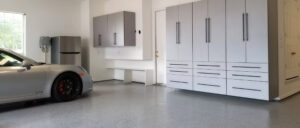
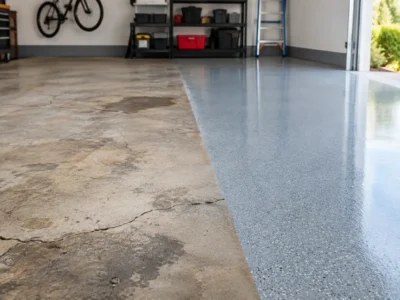
A garage floor takes a harder daily beating than almost any other surface in your home. Hot tires, lawn equipment, dropped tools, sports gear, oil drips, humidity, and constant foot traffic all leave their mark. Knowing when to replace garage flooring helps you act before a worn surface becomes a safety concern, a cleaning headache, or the weak point in an otherwise well-organized garage.
For many homeowners, the question is not whether the concrete looks brand-new. It is whether the floor still supports the way the family uses the space. A quality floor should be easy to clean, comfortable to walk on, resistant to stains, and polished enough to make cabinets, storage systems, work areas, and equipment feel intentional rather than temporary.
When to Replace Garage Flooring: The Signs That Matter
Surface wear is normal. But certain issues tell you that cleaning or a small touch-up is no longer the right answer.
1. Cracks are spreading, widening, or collecting debris
A hairline crack may be largely cosmetic, particularly in an older concrete slab. But cracks that widen over time, branch across the floor, create uneven edges, or trap dirt and moisture deserve closer attention. They can make rolling tool chests, bikes, bins, and wheeled equipment harder to move safely.
Before installing a new floor coating or covering, the concrete should be evaluated and repaired correctly. Flooring can improve the finished appearance of a garage, but it should not be used to disguise an underlying slab issue. A professional assessment helps distinguish ordinary settling from damage that needs more extensive attention.
2. Stains no longer come clean
Dark oil spots, tire marks, paint spills, fertilizer residue, and mystery stains are common in active family garages. If a deep cleaning does not make a meaningful difference, the concrete may be porous enough to have absorbed years of contaminants.
This is more than an appearance issue. Embedded grime makes a garage feel unfinished, even after new storage is installed and clutter is cleared away. Replacing or refinishing the floor gives the entire space a clean baseline and makes future cleanup far easier.
3. The surface is dusty, chalky, or flaking
If you sweep the floor and still notice fine concrete dust on stored items, shoes, and equipment, the slab may be deteriorating at the surface. Peeling, flaking, and pitting are also signs that the top layer of concrete is breaking down.
This condition is often called spalling. It can result from moisture, age, impact, previous coating failure, or the use of deicing salts carried in on vehicles. The right solution depends on the depth and extent of the damage. Minor areas may be repaired, while widespread deterioration may call for more substantial surface preparation and a new flooring system.
4. An existing coating is peeling or bubbling
A failed floor coating is one of the clearest reasons to replace garage flooring. Peeling edges, bubbling, bare patches, and hot-tire pickup make the space look neglected and can create rough spots underfoot.
The problem is not always the coating itself. In many cases, failure starts with poor concrete preparation, trapped moisture, or a product not suited to the garage environment. Simply applying a new layer over a failing surface rarely produces a lasting result. The existing material needs to be removed, the slab properly prepared, and moisture conditions considered before the new system goes down.
5. The floor feels slippery when wet
A garage floor should support real life, including wet shoes after practice, rainwater tracked in during storms, or a quick rinse of outdoor equipment. Smooth bare concrete and worn coatings can become slick when wet, especially where oil or cleaners are present.
If your family avoids walking through certain areas because the floor feels unsafe, it is time to consider a more slip-resistant surface. The right texture should improve traction without making the floor difficult to sweep or mop. That balance matters in a garage used for both vehicle parking and everyday household storage.
6. Moisture keeps appearing in the same areas
Occasional dampness can happen, especially during humid weather in markets such as Orlando, San Antonio, or Atlanta. Persistent moisture, however, needs attention before new flooring is selected. White powdery residue, dark damp patches, musty odors, and recurring coating bubbles may point to moisture moving through the slab.
A professional installer can test conditions and recommend a flooring approach appropriate for the space. Addressing moisture upfront protects the investment and helps prevent the disappointment of a beautiful new floor that fails prematurely.
7. Your garage has outgrown its current purpose
Sometimes the floor is structurally sound but no longer fits the way your household lives. Perhaps the garage has become the home base for bikes, camping supplies, sports equipment, a workbench, seasonal bins, and vehicles. Perhaps you have added premium cabinetry or overhead storage and the stained concrete now makes the space feel incomplete.
That is a valid time to replace garage flooring. A finished floor does not just improve appearance. It creates a more usable, family-friendly environment where storage zones are easier to see, equipment is easier to maintain, and the entire garage feels like part of the home.
Repair, Recoat, or Replace?
The best decision depends on the condition of the slab and the flooring already in place. Small, stable cracks and localized stains may be addressed with targeted repair before a new coating is installed. If an existing coating has worn only in high-traffic areas but remains strongly bonded elsewhere, a professional may be able to recommend a restoration approach.
Replacement becomes the smarter long-term choice when failure is widespread, moisture is affecting adhesion, the surface has significant pitting, or the floor has been patched repeatedly over the years. A one-time-investment mindset is especially useful here. Paying for proper preparation and durable materials can be more cost-effective than repeatedly dealing with peeling finishes and difficult cleanup.
Choose Flooring for How Your Family Uses the Garage
There is no single best garage flooring option for every household. The right choice should reflect how you use the space, the condition of the concrete, local climate conditions, and the finish you want.
Epoxy and polyaspartic coating systems are popular for homeowners who want a clean, finished look with stain resistance and easy maintenance. These systems can be customized in color and texture, making them a strong fit for garages that function as both parking and organized storage space. Installation quality is critical, since surface preparation has a major effect on performance.
Interlocking floor tiles can be a practical option when homeowners want a distinct visual pattern, drainage capability, or a surface that can be replaced in sections. They may not be the best fit for every slab or every cleaning preference, so it is worth considering how debris, water, and rolling equipment will move across the finished floor.
Roll-out mats can protect specific parking areas and are useful when the goal is contained coverage rather than a full transformation. They are generally less integrated in appearance than a professionally installed coating or tile system, but they can serve a limited purpose in the right situation.
Plan the Flooring Before the Garage Is Organized
Flooring is easiest to install when the garage is empty. That is why it makes sense to plan it alongside cabinets, shelving, overhead storage, slatwall, and workbench areas. Starting with the floor creates a clean foundation, then the storage layout can be designed around the family’s actual needs.
Think through where vehicles park, where kids drop sports bags, where tools and hobby supplies belong, and which items need to stay off the floor. A thoughtfully designed garage system reduces clutter, but durable flooring makes that system feel complete. It also protects the investment by giving the space a surface built for heavy use.
What to Expect From a Professional Flooring Consultation
A qualified garage specialist should look beyond color samples. The consultation should include the condition of the concrete, visible cracking, moisture concerns, floor slope, vehicle use, storage needs, and the overall look you want to achieve.
At Garaginization, the goal is to create a garage that works as a complete system, not a collection of unrelated upgrades. Professional installation helps ensure the flooring, storage, and work areas are planned to support daily routines for years, not just look good on installation day.
If your floor is dusty, stained, slippery, peeling, or simply holding back the garage you want, do not wait for the damage to become harder to address. A well-planned flooring update can give your family a cleaner starting point for every project, practice, errand, and weekend ahead.
 How Much Weight Can Overhead Racks Hold?