
A garage floor takes more daily abuse than most surfaces in the home. It handles hot tires, lawn equipment, dropped tools, muddy cleats, bike traffic, pet paws, and the occasional spilled oil or paint can. A thoughtful garage flooring buyer guide helps you choose a surface that does more than look clean on installation day. It should make your garage safer, easier to maintain, and worthy of the organized space you want to use every day.
The right choice depends on how your family uses the garage, the condition of the existing concrete, and whether you want a complete finished look or a fast visual upgrade. Flooring is not a one-size-fits-all purchase. The best investment is the one that fits your space, your climate, and the work your floor must do.
Start With How Your Garage Actually Works
Before comparing colors or finishes, consider the life happening inside your garage. A household storing holiday bins and sports equipment has different needs than a family using the space for projects, fitness equipment, bicycles, or frequent vehicle parking. The floor should support that routine without becoming another item on your maintenance list.
Ask practical questions. Will vehicles be parked inside every day? Are children regularly carrying equipment through the space? Do you need traction near a workbench or entry door? Is the garage exposed to intense summer heat, high humidity, or wind-driven rain? Homeowners in Texas, Florida, Georgia, and Nevada can all face climate conditions that affect flooring performance in different ways.
A professionally planned floor also works best when it is considered alongside cabinetry, wall organization, overhead storage, and work areas. When the entire garage has a clear purpose, the flooring can create the finished foundation that ties it together.
Garage Flooring Buyer Guide: Know Your Main Options
Most premium garage flooring decisions come down to coatings, modular tiles, and mats. Each can improve the look of bare concrete, but their performance and long-term value are not the same.
Professional epoxy and polyaspartic coatings
A coating system is applied directly to prepared concrete, creating a continuous, finished surface. Epoxy has long been a popular option because it can produce a clean, attractive floor with good resistance to staining and wear. However, the quality of the result depends heavily on concrete preparation, moisture conditions, product selection, and installation expertise.
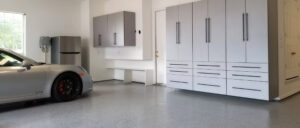
Polyaspartic coatings are often selected for their fast cure time, durability, UV stability, and resistance to chemicals and abrasion. They can be especially appealing in garages exposed to sunlight because they are less likely to discolor over time than some traditional coating systems. Decorative flakes add texture, help disguise dirt, and create a polished appearance that suits a complete garage transformation.
Coatings are an excellent fit for homeowners who want a permanent, low-maintenance floor with few seams and a custom finished look. The trade-off is that installation requires more planning. Cracks, moisture, surface contamination, and weak concrete must be addressed correctly before the coating goes down.
Interlocking garage floor tiles
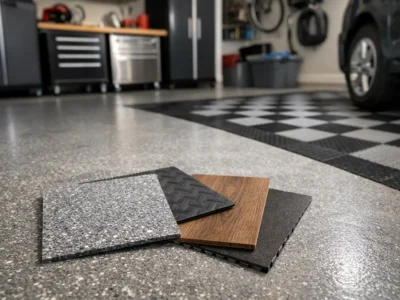
Modular tiles click together over the existing floor and are available in solid, vented, and patterned designs. They can provide a finished appearance without applying a liquid coating directly to the concrete. Some homeowners appreciate that individual tiles can be replaced if one is damaged.
Tiles may make sense for a garage that needs a quick update or for a homeowner who prefers a surface that is separate from the concrete below. Still, seams can collect debris, and some tile styles allow moisture, dirt, or spilled liquids to travel underneath. Vehicle weight, tire heat, expansion, and the quality of the locking system all matter. A low-cost tile can shift, separate, or show wear sooner than expected.
Roll-out mats
Garage mats cover sections of the floor and are often used beneath vehicles or in a designated work area. They can help contain water, road grime, and minor spills while adding some visual definition to the room.
Mats are generally the most limited option for a full-garage upgrade. They can move, curl at the edges, trap moisture, and leave the surrounding concrete unfinished. They are better suited to a targeted need than to homeowners seeking a complete, one-time-investment transformation.
Concrete Preparation Determines the Result
A beautiful coating cannot compensate for poorly prepared concrete. This is the part of garage flooring that homeowners may not see after installation, yet it has a major effect on adhesion, durability, and appearance.
Professional preparation typically begins with a close inspection of the slab. The installer looks for cracks, spalling, prior sealers, oil contamination, moisture concerns, and uneven areas. Concrete must be mechanically prepared to create the right profile for the coating system. Simply cleaning the surface is not the same as preparing it for long-term bond strength.
Cracks should be repaired before the finish is applied, but it is also wise to set expectations. Concrete naturally moves over time, particularly with temperature changes and settling. A repaired crack can be greatly improved, though no flooring provider should promise that structural movement will never show again.
Moisture is another key consideration. A slab with excessive moisture vapor can cause coating failures such as bubbling, peeling, or delamination. Testing and using the right system for the conditions protects your investment. This is one reason professional evaluation is valuable before choosing a material based on appearance alone.
Prioritize Durability, Safety, and Easy Care
The ideal floor should hold up to your household without demanding constant attention. Look beyond the initial shine and ask how the material responds to hot tires, automotive fluids, household chemicals, dropped tools, UV exposure, and repeated foot traffic.
Texture matters as much as color. A completely smooth, glossy floor may look striking, but it can become slippery when wet. Decorative flake systems and properly selected topcoats can provide a more practical level of traction while still being easy to sweep and clean. The goal is a surface that supports active family life, not one that requires everyone to walk carefully around it.
Color choice should also be practical. Mid-tone flake blends tend to hide dust, tire marks, and everyday debris better than very light or very dark solid colors. They also complement the clean lines of premium cabinetry, slatwall panels, and storage systems without making the room feel overly industrial.
Understand Cost as a Long-Term Investment
Garage flooring prices vary based on square footage, concrete condition, material type, decorative finish, repairs, and local labor requirements. A simple square-foot estimate can be useful, but it does not reveal whether the quote includes meaningful surface preparation, crack repair, moisture evaluation, quality topcoats, and a clear warranty.
The lowest initial price is rarely the best measure of value. A bargain coating that peels after a few seasons creates disruption, removal costs, and the frustration of starting over. On the other hand, the most expensive option is not automatically right for every garage. The strongest choice is a system designed for your floor’s condition and your daily use.
When reviewing proposals, ask what preparation method will be used, how cracks are handled, what coating layers are included, how long the installation process takes, and what care is required afterward. Clear answers are a sign that the provider is focused on performance rather than a quick cosmetic result.
Choose Flooring That Completes the Garage
A finished floor has the greatest impact when it is part of a larger organization plan. Clean flooring makes it easier to see what belongs in the garage and where it should go. It also elevates the appearance of storage cabinets, work surfaces, and wall-mounted systems, turning a crowded utility area into an extension of the home.
For families who want to reclaim space from clutter, Garaginization can help align durable flooring with a custom garage design that supports tools, sports gear, seasonal storage, and everyday routines. Professional planning avoids the common problem of investing in one improvement only to find that the room still lacks function.
A garage floor should give you confidence each time you pull in, start a project, or send the kids out to find their gear. Choose a surface built for real life, then give it the organized surroundings that make the entire garage easier to enjoy.
 How to Plan a Garage Renovation That Lasts