

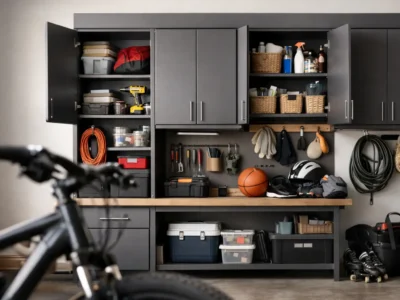
A cabinet-filled garage can still feel chaotic when every door hides a different pile of paint, hand tools, sports gear, and forgotten household supplies. Learning how to organize garage cabinets starts with a better goal than simply making things fit: give every item a dependable home that makes daily life easier. When the family can find a bike pump, extension cord, or cooler without opening five cabinets, the garage begins to work as it should.
Custom cabinets provide a polished foundation, but the system inside them matters just as much. A well-planned cabinet layout protects belongings from dust, keeps potentially hazardous items out of reach, and clears the floor for parking, hobbies, and weekend projects.
Start by Assigning Each Cabinet a Purpose
The most common organizing mistake is treating all garage cabinets as interchangeable storage. They are not. A tall cabinet near a work area should not hold the same items as a base cabinet near the entry to the house. Before placing anything inside, assign each cabinet a clear category based on where it sits and how your household uses the garage.
Think in zones rather than individual items. A household supply zone may include paper goods, bulk purchases, light bulbs, and cleaning products. A project zone can hold hand tools, fasteners, adhesives, and equipment used for repairs. Family activity zones are ideal for sports equipment, camping supplies, pool accessories, or car-care products.
This approach prevents category creep. If camping gear begins migrating into the tool cabinet because there is open space, the system gradually loses its logic. Empty space is useful, but it should be reserved for growth within that cabinet’s assigned purpose.
Build zones around your actual routines
Place the things you use most where they are easiest to reach. If the kids grab soccer gear several times a week, dedicate accessible lower cabinets or drawers to that equipment. If holiday decorations only come out once a year, they belong in higher cabinets or overhead storage rather than prime cabinet space.
Consider the path each item takes. Gardening supplies should be close to where you head outside. Reusable shopping bags and pet supplies may belong near the door leading into the home. A workbench area benefits from cabinets that keep supplies close at hand without leaving them exposed on the work surface.
Empty Cabinets Before You Organize Them
A cabinet can look full without being useful. Remove everything from one zone at a time and sort it into clear groups: keep, relocate, dispose of, and donate. This is also the moment to identify duplicates, expired products, damaged equipment, and supplies that no longer fit your family’s lifestyle.
Do not rush this step by moving clutter from one cabinet to another. The goal is to reduce the volume of items competing for cabinet space. A family that no longer camps may not need a cabinet devoted to camping cookware. Likewise, four partially used containers of the same product may be consolidated when appropriate and safe.
Keep like items together during the sorting process. Seeing all of your painting supplies, cleaning products, or sports accessories in one place makes it much easier to determine how much storage that category truly needs. It also reveals whether cabinets are the right location. Bulky, awkward, or high-use items may be better served by a dedicated rack, slatwall accessory, or open shelf system.
How to Organize Garage Cabinets by Frequency and Weight
Once categories are established, use cabinet space according to two practical rules: frequency of use and weight. This is where an attractive garage becomes a safer, more functional one.
Store frequently used items between waist and shoulder height whenever possible. These shelves are the most comfortable to access and should hold everyday essentials such as basic tools, car-care supplies, athletic equipment, and commonly used household overflow. Lower cabinets work well for heavier items, including power tools, cases of beverages, and larger containers that are difficult to lift.
Reserve upper shelves for lightweight, infrequently used belongings. Seasonal party supplies, extra blankets, and holiday items can sit higher because they are not needed every week. Avoid placing heavy bins or equipment overhead, even if a shelf technically has room. Easy access is part of safe storage.
For households with children, store chemicals, sharp tools, and potentially hazardous materials in lockable cabinets or on higher shelves. Keep these items separate from sports gear, snacks, and family supplies. This distinction is simple, but it makes a major difference in a busy home.
Use the right container inside the cabinet
Cabinet interiors become more efficient when small items are contained rather than allowed to roll, stack, and disappear. Clear bins help identify contents quickly, while labeled solid bins can create a cleaner visual appearance. Shallow trays are useful for hardware, batteries, measuring tools, and small accessories that otherwise collect at the back of a shelf.
Choose containers that match the cabinet dimensions. Oversized bins waste vertical space and force you to remove everything to reach what is behind them. Smaller, stackable containers work better for supplies that need to be separated, but avoid stacking so high that the bottom bin is never accessed.
Labels should be plain and specific. “Sports” is less useful than “Baseball,” “Soccer,” or “Pool Towels.” The goal is for every family member to return an item without asking where it belongs. If a category changes with the season, use removable labels rather than creating a permanent cabinet identity that no longer makes sense.
Give Each Shelf a Front-to-Back Plan
The front of every shelf should hold the items you reach for often. Place backups, refills, and seasonal items behind them. This prevents the familiar problem of buying another bottle of cleaner or another package of light bulbs because the existing supply was hidden in the back.
Keep each shelf to one primary category whenever possible. A cabinet that combines automotive products, paint supplies, and pet food may look organized for a week, but it becomes difficult to maintain. If categories must share a cabinet, create clear shelf boundaries and use bins to prevent items from drifting together.
Cabinets with adjustable shelving are especially valuable because storage needs change. A shelf set for small paint cans may need to move when your family adds larger tools or bins. The best layout is not the one that holds the most stuff. It is the one that makes items visible, reachable, and simple to put away.
Use Cabinets as Part of a Complete Garage System
Cabinets are excellent for enclosed, clean-looking storage, but they should not be asked to hold everything. A garage performs better when each storage solution handles the items it is best suited for. Cabinets protect supplies and reduce visual clutter. Heavy-duty shelving can support bulky bins. Overhead racks keep seasonal belongings above the active area. Slatwall systems make frequently used equipment easy to see and retrieve.
This is also where professional planning can eliminate costly compromises. Cabinet depth, shelf capacity, workbench placement, and clear walking paths all affect how usable the finished space feels. A layout that looks good on paper may fall short if cabinet doors interfere with parking space or if the equipment your family uses most ends up inconveniently stored.
Garaginization designs complete garage environments around the way each household actually lives. For homeowners who want a finished, high-capacity system rather than a collection of temporary fixes, custom cabinetry paired with the right supporting storage creates a lasting result.
Create a Simple Maintenance Routine
Even the best cabinet organization needs a small amount of upkeep. The good news is that a clear system is much easier to maintain than a crowded one. Set aside a few minutes at the end of a season to return misplaced items, remove empty containers, and check whether a category has outgrown its assigned cabinet.
For example, summer may leave pool gear and outdoor toys taking up extra room, while fall brings sports equipment and holiday supplies back into rotation. Adjusting these categories before they become a pile keeps the garage ready for the next weekend, school day, or family outing.
The lasting value of organized garage cabinets is not just a cleaner view when you pull in. It is the calm of knowing that what your family needs has a place, is easy to find, and is ready when life gets busy.
 Slatwall vs Pegboard Garage Storage Compared