

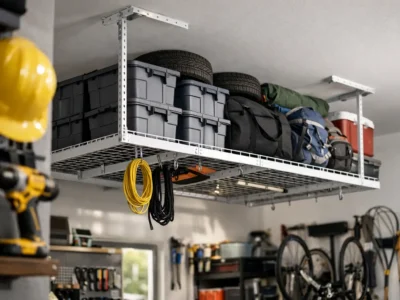
A ceiling-mounted storage system can clear an extraordinary amount of floor space, but overhead rack safety starts with a simple reality: anything stored above your vehicle, work area, or family traffic path must be planned to stay there. Seasonal bins, camping gear, luggage, and holiday decorations are ideal candidates for elevated storage when the system is correctly specified, professionally secured, and used within its limits.
For busy households, the goal is not merely to put clutter out of sight. It is to create a garage that is easier to move through, easier to clean, and safer for everyone who uses it. A well-designed overhead rack makes that possible without asking you to balance on a ladder or work around stacks of totes on the floor.
What Overhead Rack Safety Really Depends On
A safe overhead storage system is not defined by the rack alone. The rack, mounting hardware, ceiling structure, stored items, clearances, and installation quality all work together. A heavy-duty steel frame may have an impressive published capacity, but that capacity only matters when it is attached to suitable structural framing with the proper fasteners and installation method.
This is why a one-size-fits-all approach can create problems. Garage ceilings vary in height, framing direction, obstructions, and usable layout. A rack that looks well placed in one home may interfere with lighting, vehicle clearance, or access in another. Professional planning accounts for those details before anything is mounted overhead.
There is also a practical safety component. The most secure rack is less useful if the items on it are difficult to reach, overfilled, or impossible to identify. Good design keeps stored belongings contained, visible, and within a sensible retrieval zone.
Start With the Ceiling, Not the Storage Bins
Before choosing rack dimensions or deciding what to store, the ceiling needs to be evaluated. Overhead systems should be secured to the appropriate structural members, not simply to ceiling surface material. The installer must identify framing locations, account for the direction of the framing, and use mounting methods engineered for the intended load.
This step is especially important in garages with finished ceilings, unusual framing layouts, or mechanical and electrical elements above the ceiling plane. Guessing at mounting locations or relying on a visual inspection is not a safety strategy. The ceiling structure must support the planned installation.
A trained installer also considers where the rack sits in relation to lighting, outlets, sprinkler components where applicable, attic access, and other permanent features. A clean-looking layout should never compromise access or interfere with another essential system in the space.
Height and clearance are part of the design
Ceiling height affects both capacity and convenience. In a taller garage, a deeper drop can create substantial storage volume while maintaining ample clearance below. In a lower garage, the rack must be positioned carefully so it does not create a head-strike risk or reduce the usable parking area.
Vehicle clearance deserves special attention. Account for the tallest vehicle that normally uses the garage, including roof-mounted carriers, open liftgates, and the natural path of pulling in and out. A rack should not turn routine parking into a daily measuring exercise.
The same rule applies to walkways. Keep elevated storage away from the areas where family members carry groceries, load sports equipment, or move bicycles and strollers. The open floor below should feel more usable, not more restricted.
Match the Load to the System
Weight capacity is one of the most discussed parts of overhead rack safety, and it is also one of the easiest details to misunderstand. Capacity is not an invitation to load every corner of a rack with the heaviest possessions in the house. It is a maximum rating that depends on proper installation, even load distribution, and the specific system configuration.
Start by assigning the right categories of items to elevated storage. Lightweight but bulky seasonal decorations, empty luggage, camping supplies, extra paper goods, and labeled storage bins are often a strong fit. Frequently used hand tools, everyday sports equipment, and anything needed by children are better stored where access is immediate and stable.
Avoid treating overhead storage as a destination for loose, awkward, or shifting items. Belongings should be contained in durable bins or securely stored containers that fit the rack surface. If a bin is cracked, its lid does not close, or its contents have become too heavy to lift comfortably, it does not belong overhead.
Distribute weight deliberately
Place heavier containers toward supported areas of the rack according to the system’s specifications, and spread weight across the surface rather than concentrating it in one spot. Do not stack items above the rack’s intended storage plane or let containers extend beyond the edges where they could be bumped or shifted.
Labels are more than an organization feature. Clear labels reduce unnecessary handling and make it easier to retrieve the right bin without moving several others. For active families, labeling by season, activity, or household category keeps the system practical long after installation day.
It also helps to reserve some capacity. A rack filled to its absolute limit leaves little flexibility for changing needs and makes visual inspections harder. An organized garage should have room to adapt as hobbies, seasons, and family routines change.
Safe Access Is Not Optional
A professionally installed rack can still become a risk if it is accessed carelessly. Use a stable, appropriate ladder on a clear and level garage floor. Never climb on vehicles, cabinets, work surfaces, or unstable furniture to reach stored items. Keep children from attempting to retrieve overhead items on their own.
Plan storage around access frequency. Items used once or twice a year can be placed higher or farther back. Items used every month may need a lower, more accessible location within the overall garage organization plan. This is one reason custom design matters: the safest storage location is not always the highest available space.
When retrieving bins, remove one container at a time and keep a clear landing area below. If an item is too heavy or awkward for one person to handle safely, ask for help. The few extra minutes are worth avoiding a fall or dropped load.
Inspect Your Overhead Storage Regularly
Overhead storage does not require constant attention, but it should not be forgotten once it is loaded. A quick visual inspection several times a year is a sensible habit, especially before and after seasonal storage changes. Look for changes in the position of the rack, loose hardware, damaged bins, sagging containers, or items that have migrated beyond the rack edge.
Pay attention to moisture and temperature conditions as well. Garages in Dallas-Fort Worth, Orlando, San Antonio, Atlanta, and Las Vegas experience very different weather patterns, yet every market can face temperature swings or humidity that affect what should be stored overhead. Cardboard can weaken, plastic lids can warp over time, and certain household products may not be suited to hot garage environments. Use durable containers and follow product guidance for sensitive items.
If you notice movement, damage, corrosion, or a change in how the rack is sitting, stop using it until the issue has been assessed. Do not add more weight in an attempt to make the arrangement fit. Addressing a small concern early protects the larger investment in your garage.
Why Professional Installation Delivers Greater Confidence
Overhead storage is a high-value way to reclaim square footage, but it is not an area where shortcuts belong. Professional installation brings the advantage of accurate measurements, structural awareness, appropriate hardware, and a layout designed around the way your household actually uses the garage.
At Garaginization, trained W2 employee installers create integrated garage storage systems that consider capacity, access, appearance, and day-to-day safety together. The result is not simply a rack on the ceiling. It is a finished storage solution that supports family gear, seasonal belongings, hobbies, and the calm that comes from knowing everything has a proper place.
The best overhead storage system fades into the background of daily life. Your floor stays open, your belongings stay protected, and the items you need remain easy to find when the season or weekend plans call for them.
 How to Secure Overhead Storage in Your Garage