

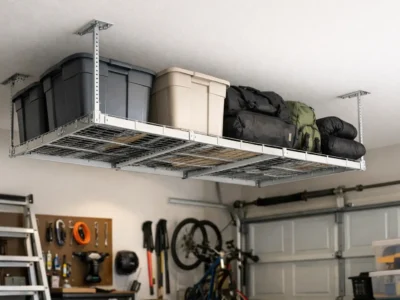
A ceiling-mounted rack can clear an impressive amount of floor space, but only when it is treated as a structural storage system rather than a convenient place to stack extra bins. Knowing how to secure overhead storage starts with understanding what is above the ceiling, what the rack is designed to carry, and how your family will safely use the space over time.
For busy households, overhead storage is an excellent home for seasonal decorations, camping equipment, luggage, keepsakes, and other items that do not need daily access. It keeps the garage open for vehicles, sports equipment, projects, and the routines that make family life run more smoothly. The goal is not simply to put belongings up high. It is to create a secure, accessible system that stays dependable year after year.
Why Overhead Storage Requires a Plan
The primary risk with overhead storage is not the rack itself. It is an installation that does not account for the ceiling structure, the true weight of stored items, or the clearance needed below. A rack can look level and solid on day one while being connected to materials that were never intended to bear that load.
Drywall, for example, provides a finished surface, not structural support. Secure overhead racks must be anchored into the appropriate structural framing and installed according to the rack manufacturer’s specifications. The exact approach depends on the garage ceiling, framing layout, rack design, and intended load. That is why a professional evaluation is more valuable than a quick visual estimate.
A well-designed overhead system also considers how the rest of the garage functions. Storage should not crowd lighting, obstruct safe paths, interfere with ceiling-mounted equipment, or make it difficult to park and move around the space. The best installations make the garage feel larger without creating a new safety concern overhead.
How to Secure Overhead Storage Safely
Start with the ceiling structure
Before selecting a location, the installer should identify the structural members that can properly support the rack. The rack needs to attach where the load can be transferred safely through the ceiling framing, using hardware specified for that system and application. Mounting into a finished ceiling surface alone is not an acceptable substitute for proper structural attachment.
Ceilings vary, even between homes built in the same neighborhood. Framing direction, spacing, ceiling height, mechanical components, electrical wiring, and insulation can all affect what is possible. A trained installer evaluates these conditions before drilling, which helps prevent damaged finishes and avoids guesswork about where a rack can safely be placed.
This is also where premium materials matter. Heavy-duty steel racks, quality fasteners, and hardware designed to work together provide a more reliable foundation than mismatched components. A storage system should be engineered as a complete assembly, not pieced together based on what happens to fit.
Match the rack capacity to the real load
Every overhead rack has a stated capacity, but that number only helps when it is understood correctly. Capacity is based on specific installation conditions and typically assumes the weight is distributed across the rack. It is not a reason to place one exceptionally heavy object in the center or along one edge.
Plan for the total weight of bins and contents together. Holiday decor may be relatively light, while books, exercise equipment, tools, boxed tile, or dense hobby materials can add up quickly. Items that seem manageable one at a time can become a substantial load when grouped in several large containers.
Use overhead storage for belongings that are appropriate for elevated, occasional-access placement. Keep very heavy items and items you need often in lower, more accessible storage. That choice protects the rack, makes retrieval safer, and helps prevent the familiar problem of climbing up to search through an overloaded bin.
Distribute weight and use stable containers
Once a rack is installed, loading it correctly is part of keeping it secure. Place weight evenly from side to side and avoid concentrating dense items in one small area. Larger, heavier bins should sit fully supported on the rack surface, with their lids secured and their contents contained.
Durable, lidded containers are a practical choice because they stack neatly, protect belongings from dust, and reduce the chance of loose objects shifting. Clear labels are equally useful. When every bin is identified from the floor, there is less need to pull down several containers to find one item.
Do not overfill bins to the point that lids bow or containers become awkward to lift. A storage plan that looks efficient but requires two people to wrestle a heavy tote down from a ladder is not a convenient plan. The right system balances capacity with safe, realistic access.
Choose Placement That Supports Daily Life
The most useful overhead storage occupies unused ceiling area while preserving comfortable movement below. It should leave room for parking, walkways, work areas, and frequently used equipment. A professionally designed layout takes measurements from the beginning so the rack serves the room instead of competing with it.
Ceiling height is a major consideration. Higher ceilings can create valuable storage volume, but they also increase the effort and risk involved in retrieving items. The rack height should provide sufficient clearance below while remaining reasonably accessible with safe equipment and a planned retrieval process.
Location matters as much as height. Seasonal items may be well suited for a less accessible zone, while camping supplies or event decor may belong where they can be reached without disrupting the rest of the garage. This is one reason custom garage organization produces better results than adding storage one piece at a time.
Inspect the System After Installation
A secure rack deserves a quick visual check before each major seasonal changeover. Look for loose or damaged containers, sagging, corrosion, shifted contents, or any visible change in the rack’s alignment. If anything appears different, stop using the system until a qualified professional can inspect it.
Avoid adding more weight just because there appears to be open space. Open space is useful for maintaining access, distributing items properly, and avoiding capacity creep over the years. As families accumulate more gear, it is easy for a carefully planned rack to become a catch-all for anything that does not fit elsewhere.
Garage conditions can also affect stored belongings. In areas with intense heat, humidity, or temperature changes, choose containers and stored materials accordingly. Sensitive items such as photographs, certain electronics, or delicate fabrics may be better kept in climate-controlled areas of the home.
Professional Installation Protects the Investment
Overhead storage has a straightforward purpose, but safe installation demands attention to details most homeowners should not have to manage alone. A professional installer assesses the ceiling, confirms the proper placement, uses the correct attachment method, and installs the system with the entire garage layout in mind.
Garaginization designs garage storage around the way each household actually lives. That may mean overhead racks paired with cabinetry for heavier items, slatwall for active gear, and dedicated zones that keep everyday essentials at a comfortable height. The result is a polished, family-friendly garage where stored items are secure and the floor space is finally useful again.
The best overhead storage is easy to overlook because it does its job quietly: seasonal belongings stay protected, the garage remains open, and you know exactly where everything belongs. That confidence begins with a system designed for the ceiling above it and the life happening below it.
 How Long Does Epoxy Flooring Last in a Garage?